AI Folk Song Generator
Loading...
How to write folk songs with AI
Pick a tradition and name the subject
Choose a folk style in the style field: Americana, Celtic, bluegrass, singer-songwriter. Then fill in who or what the song is about. Folk songs are usually about a specific person, place, or moment. Name it.
Tell the story
In the long field, write what happened. Real details beat poetic abstractions. 'She kept every letter in a shoebox under the bed' gives the AI more than 'she remembered everything.' Concrete images become better verses.
Generate and listen to the words
Hit Generate. In folk, the lyrics carry the song. Listen to whether the story comes through. If important details are missing, add them to the story field and regenerate. The melody and arrangement will adapt to the new narrative.
Instrumentation that stays out of the story's way
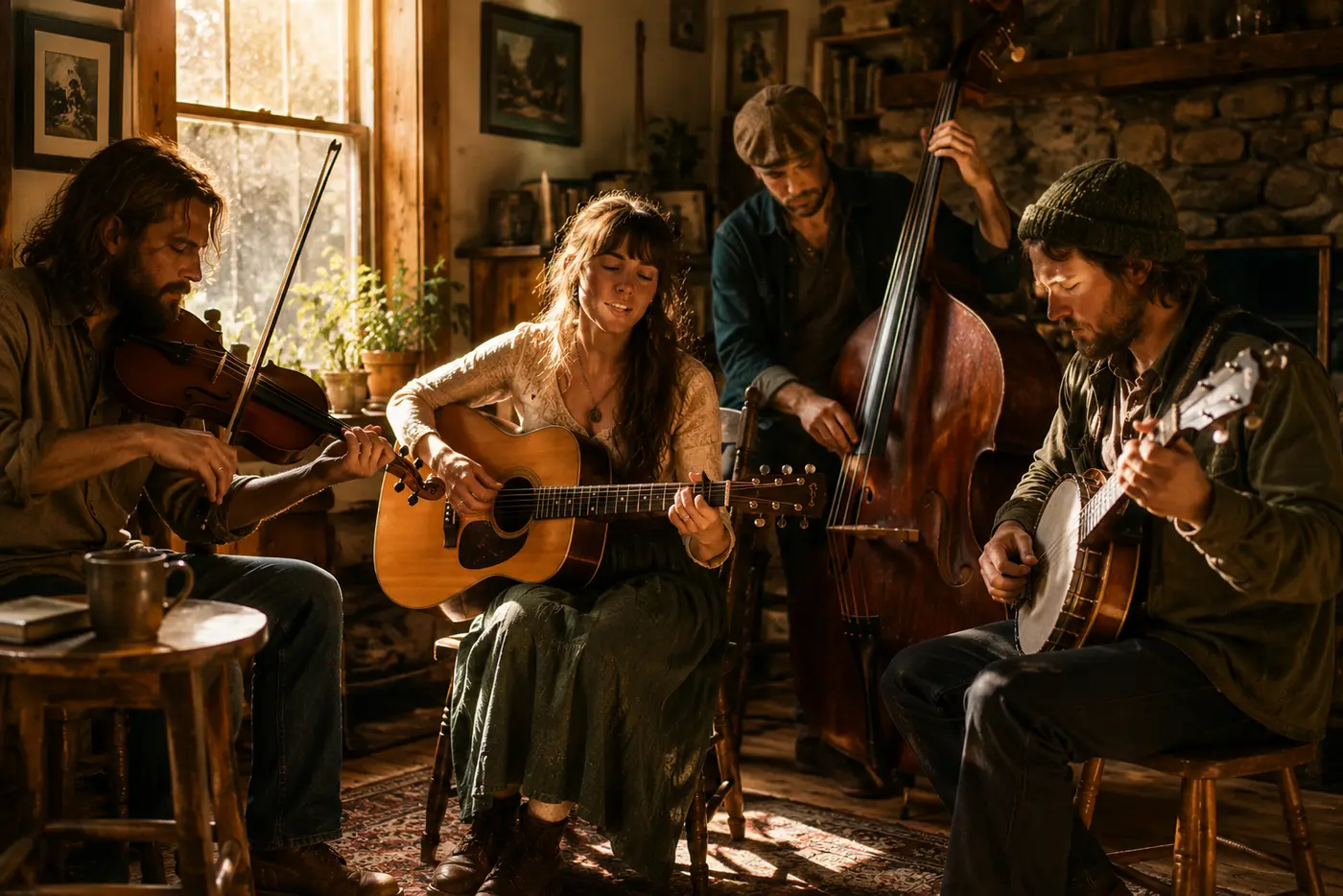
Folk instrumentation has one job: support the voice. The guitar keeps time. The fiddle adds color between lines. The bass holds the root. Nothing competes with the words. The AI generates with this hierarchy. The acoustic guitar is fingerpicked or strummed depending on tempo and style. It sits behind the vocal, not beside it. If you chose Celtic, a fiddle or tin whistle enters during instrumental breaks but pulls back when the singing resumes. If you chose bluegrass, the banjo rolls underneath and the mandolin takes the breaks. The mix stays open. You can hear the room. That sense of space is part of what makes folk sound like folk.
The form asks for a story, not a song description
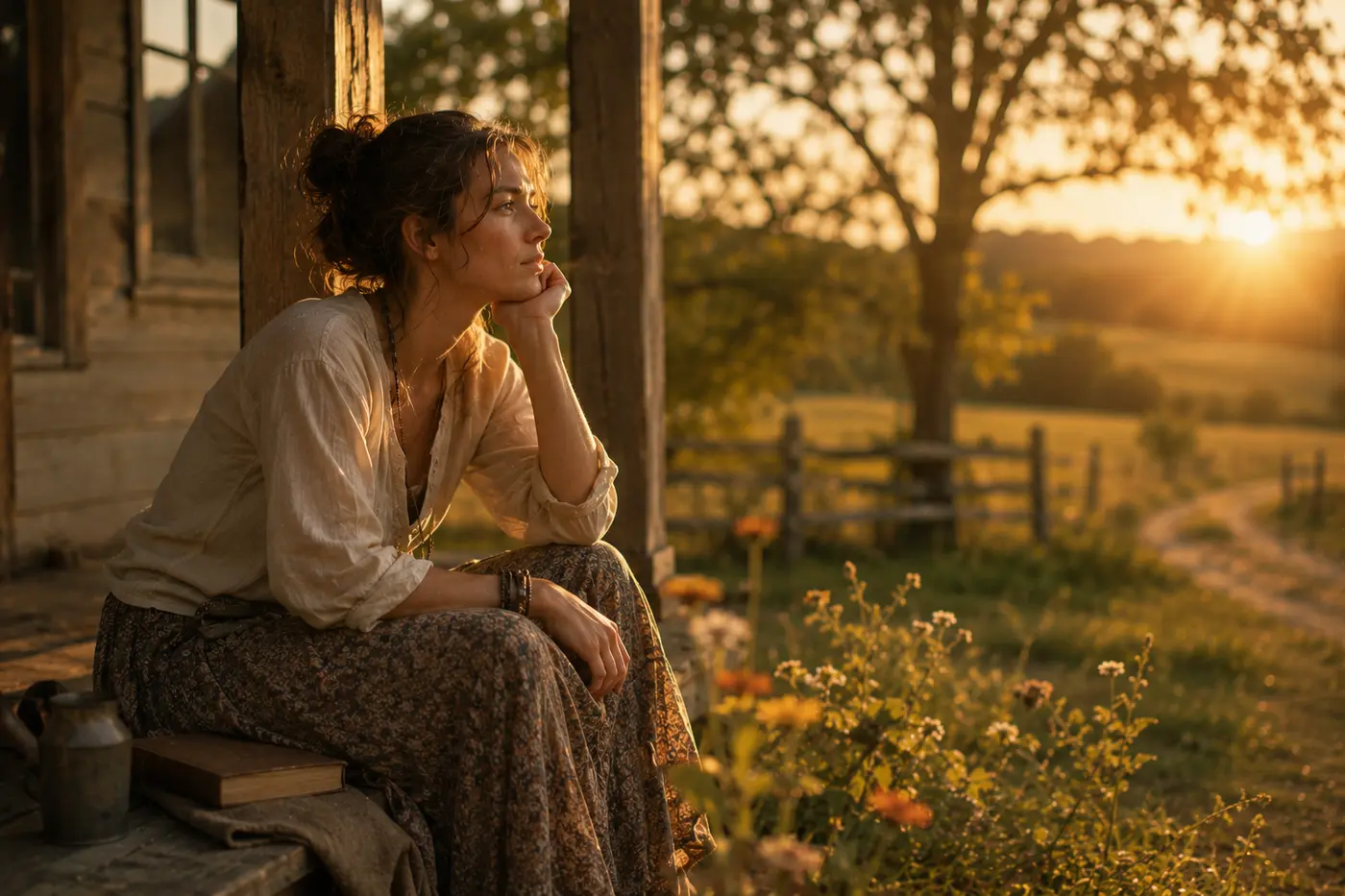
Folk songs start with something that happened. A person, a place, a small event that turned out to matter. The form is built around that. The short fields set the frame: who the song is about, the occasion, and a folk tradition. The long field is where you tell the story. Not a mood, not an energy level. A story. 'My father drove the same truck for 22 years. When he sold it, he sat in the empty driveway for an hour and didn't say why.' The AI takes a moment like that and builds a song around it: verses that unfold the narrative, a chorus that names the feeling the story circles around, and a melody simple enough that the words stay in front.
Why write folk songs with SunoPrompt
Folk songwriting looks simple but the craft is in making a three-chord song carry a story that stays with you. The AI handles the craft. You bring the story.
Story in, song out
You tell the AI what happened. It writes verses that unfold the narrative, finds a melodic line that stays out of the way, and picks instruments that match the tradition. The conversion from prose to song is the hard part of folk writing, and the AI does it.
Tradition-specific composition
Celtic, Americana, bluegrass, and protest folk follow different melodic, harmonic, and rhythmic rules. The AI doesn't blend them into a generic 'folk' sound. Each tag loads the conventions of that specific tradition: tuning, ornamentation, guitar technique, and melodic shape.
Lyrics that use images, not adjectives
Good folk lyrics show instead of tell. The AI generates with concrete nouns and specific actions rather than abstract emotion words. 'The screen door still swings on one hinge' carries more weight than 'the house feels empty.' Your story details become that kind of lyric.
A voice that belongs in the room
The vocal sits close and unprocessed. No reverb cathedral, no pitch-perfect studio shine. The delivery follows the natural speech rhythm of the words. It sounds like someone singing to you specifically, which is how folk songs are meant to be heard.
Verse-forward structure that serves the narrative
The AI doesn't force every song into a chorus-driven format. If the story needs five verses and a one-line refrain, that's what it writes. If the story resolves in three verses with a final twist, the song ends there. The structure follows the story, not a template.
Details from your life become the song
The story field takes your actual words. A specific truck, a specific kitchen, a specific hill behind the house. These details make the song yours rather than anyone's. Folk has always been about particular lives in particular places. The form is designed for that kind of input.
Full toolkit
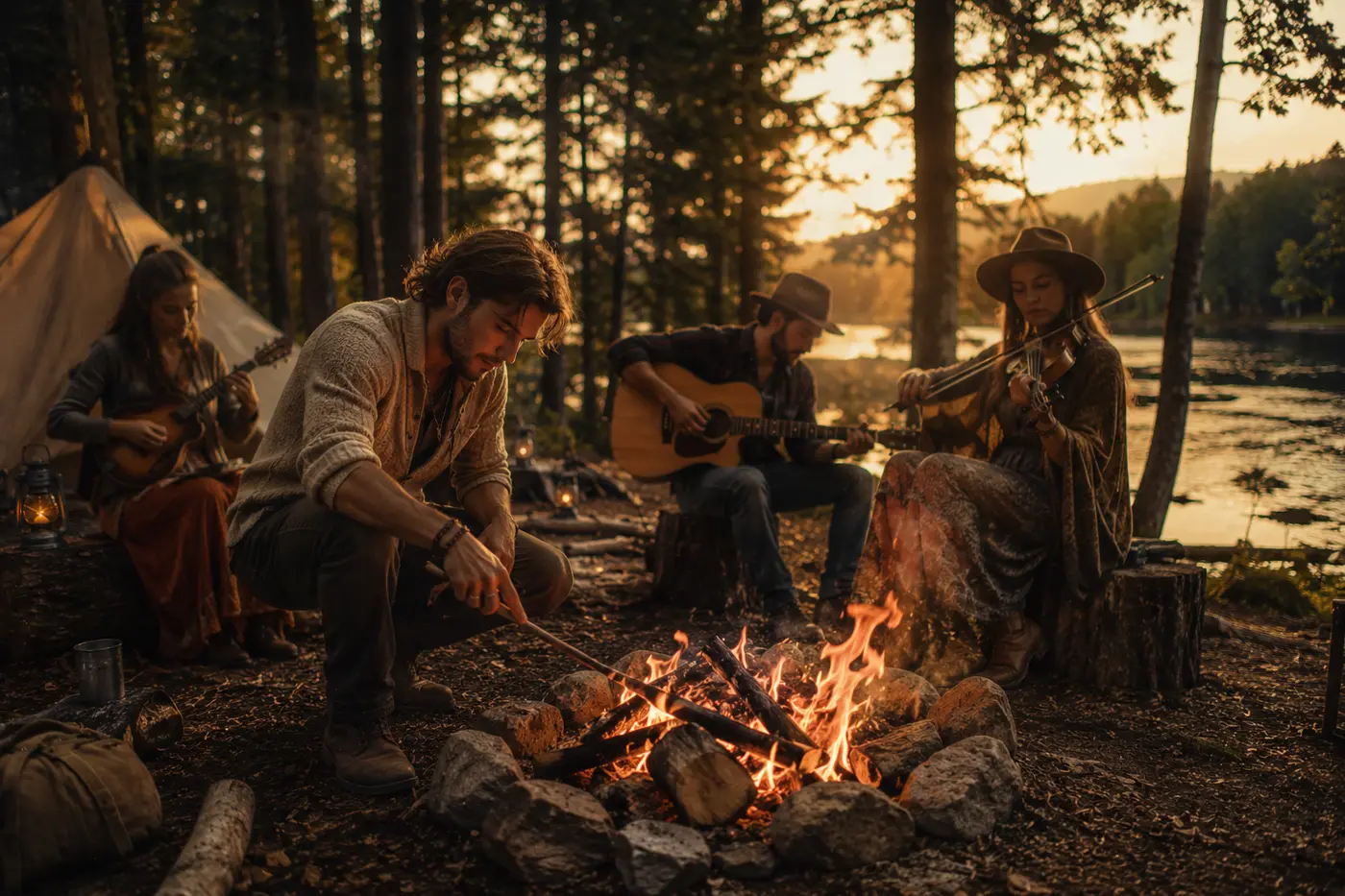
The folk song is the campfire, here is the whole forest
The AI Folk Song Generator handles story-driven acoustic tracks. SunoPrompt's other tools cover lyric drafting, cross-genre production, and stem separation for isolating parts of your generated folk song.
AI Music Generator
For songs outside the folk tradition. If your project pairs a folk ballad with a rock track or needs an ambient interlude between acoustic pieces, the main generator handles any genre from the same account.
Lyrics Generator
When you have the story but not the stanzas. Feed it your narrative and a folk style: 'Appalachian ballad about a coal miner's daughter leaving home.' The output comes back with verse structure, imagery, and phrasing that fits the tradition.
Vocal Remover & Stem Splitter
Pull the guitar out of a generated folk track to learn the fingerpicking pattern. Isolate the vocal to hear the melody unaccompanied. Separate the fiddle to check whether it adds the right color. Useful for musicians who want to cover or adapt generated songs.
Explore more AI music tools
Who writes folk songs with this
Storytellers and writers
Turn a short story, a family memory, or a character sketch into a song without any musical training
Hear how your narrative sounds with a melody and acoustic arrangement wrapped around it
Generate songs for storytelling performances, readings, or audio projects that need original music
What is an AI folk song generator?
An AI Folk Song Generator writes complete folk songs from a story you provide. You tell it what happened, pick a folk tradition, and the AI composes a song with narrative lyrics, acoustic instrumentation, and a melody rooted in the style you chose. No guitar skills, no songwriting experience, no recording setup.
Folk is the genre where the story IS the song
In pop, the melody carries the song and lyrics support it. In folk, the words carry everything. The melody exists to make the words easy to remember. The guitar exists to give the singer something to lean on. This priority order changes what the AI needs from you. Instead of a mood or an energy level, it needs a story. Who did what, where, when, and why it mattered. 'My mother sang in the kitchen every morning until the morning she didn't' gives the AI a complete emotional arc: routine, absence, and the weight of what's missing. The better the story, the better the song.
Folk traditions shape everything, not just the accent
Write 'Americana' and you get a flat-picked acoustic guitar, a vocal that sounds like open highway, and lyrics that tend toward personal narrative. Write 'Celtic' and the guitar shifts to fingerpicking in DADGAD tuning, a fiddle enters, and the melody follows older scale patterns with ornamental turns. Write 'bluegrass' and the tempo picks up, the banjo leads, and the vocal sits higher and more nasal. Write 'protest folk' and the arrangement strips down to guitar and voice with lyrics that address the room directly. Each tradition has conventions the AI follows. Mixing them works too: 'Celtic Americana, fiddle and steel guitar' produces a hybrid the AI can construct.
Concrete details make better folk songs than abstract feelings
Write 'sadness and loss' and the AI produces generic lyrics about hearts and rain. Write 'the chair at the dinner table nobody sits in anymore, the way the dog still walks to it and waits' and the AI writes a verse you can see. Folk songwriting has always worked this way. Woody Guthrie wrote about dust. Johnny Cash wrote about a specific prison. Joni Mitchell wrote about a specific parking lot. The story field works best when you give it objects, places, and small actions. 'He folded the map wrong every time and she stopped correcting him' tells the AI more about a relationship than 'they loved each other.'
The voice in folk: close, natural, not performing
Folk vocals don't project. They confide. The singer sounds like they're across a table, not across a venue. The AI generates with this proximity. No vibrato flourishes, no belted high notes, no vocal runs. The delivery follows the speech rhythm of the lyrics. If a line is conversational, the melody bends to fit the words rather than forcing the words into a melodic pattern. The Voice Gender selector sets the timbre. Female folk vocals tend clear and direct. Male folk vocals tend warm with a slight grain. Both stay within a narrow range because folk melodies are meant to be singable by anyone.
Structure in folk: verse-heavy, chorus optional
Pop songs build toward the chorus. Folk songs build through verses. The chorus, if there is one, might be a single repeated line or a short refrain. The verses do the heavy lifting, each one advancing the story or adding a new perspective. The AI generates with this verse-forward structure. A four-verse folk song with a one-line refrain is a valid output. So is a three-verse ballad with no chorus at all, just a final line that reframes everything that came before. If you want a more conventional chorus, write 'strong chorus, repeating hook' in the style field. Otherwise the AI defaults to letting the story unfold verse by verse.
How this differs from a generic AI music tool
Generic AI tools prioritize melody and production. Folk prioritizes lyrics and narrative. The AI composes the words first and builds a melody that serves them, rather than writing a catchy melody and fitting words into it.
Most generators apply the same mix approach to every genre: vocals centered, instruments filling the spectrum. Folk needs space and proximity. The AI mixes with room ambience, minimal processing on the voice, and instruments that sit behind rather than beside the vocal.
A standard tool structures every song as verse-chorus-verse. Folk songs often have four or five verses with a minimal refrain or no chorus at all. The AI generates verse-forward structures that let the story develop without interrupting it for a hook.
Other generators treat all acoustic guitar the same. Folk guitar varies by tradition: Celtic fingerpicking patterns differ from Americana strumming differ from bluegrass flatpicking. The AI matches the guitar technique to the folk style tag.