AI Meditation Music Generator
Loading...
How to create meditation music with AI
Name the practice
Start with the session type: mindfulness, breathwork, body scan, loving-kindness, walking meditation, yoga, or focus reset. The practice tells the AI whether the track should hold still, pulse gently, or leave more silence between sounds.
Set the pace and texture
Use the short fields for mood, duration feel, and sound style. Try 'slow breathing, warm drone, soft temple bell' or 'morning clarity, light piano, calm ambient music.' Specific texture words guide the arrangement better than 'relaxing music.'
Choose a voice direction and generate
Pick Male, Female, or Random if you want vocal color or spoken-style phrasing to influence the result. If you want instrumental meditation background music, say that clearly in the long field, then generate and adjust the next prompt based on what felt too busy or too empty.
Build around the breath, not the chorus
A pop song needs hooks. Meditation music needs room. The rhythm should not push the listener forward. It should create enough timing for the body to notice the next breath without feeling rushed. Use the long field to describe pacing in plain language: 'long exhales,' 'one phrase every 20 seconds,' 'no drums,' 'tiny bell after each breath cycle.' SunoPrompt can turn that into AI meditation music that feels structured without sounding like a metronome.
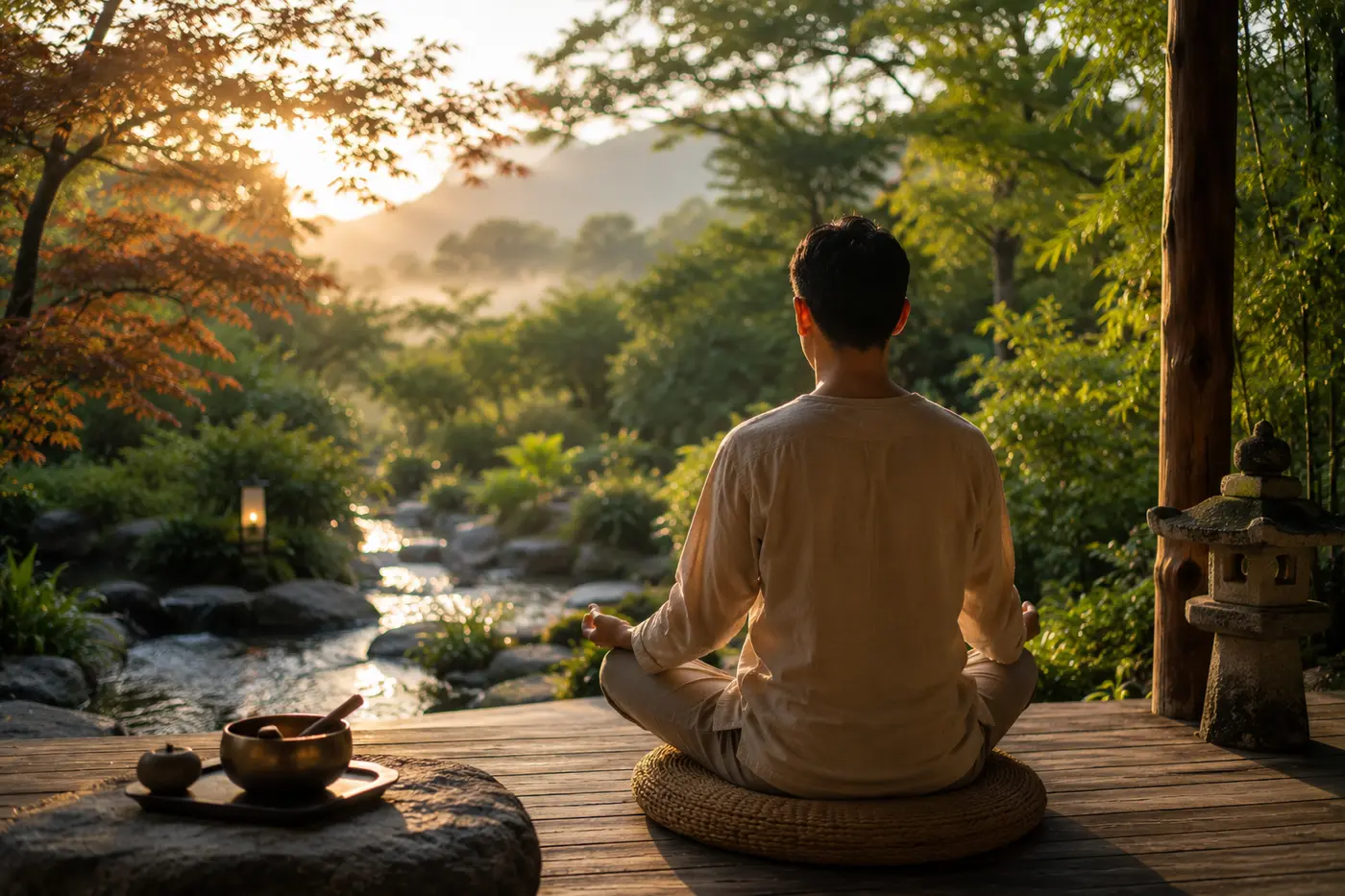
Give the mind a sound it can return to
Meditation music is not background filler. A good track gives attention a place to land. That can be a low drone, a soft bell every few breaths, a slow piano tone, or a warm pad that holds steady while the mind wanders and comes back. The form collects the details that matter for practice: what the session is for, how slow it should feel, what sound world fits, and what kind of attention you want to train. Write 'box breathing, four-count inhale, four-count exhale, soft bell at the turn' and the AI has a real meditation brief.
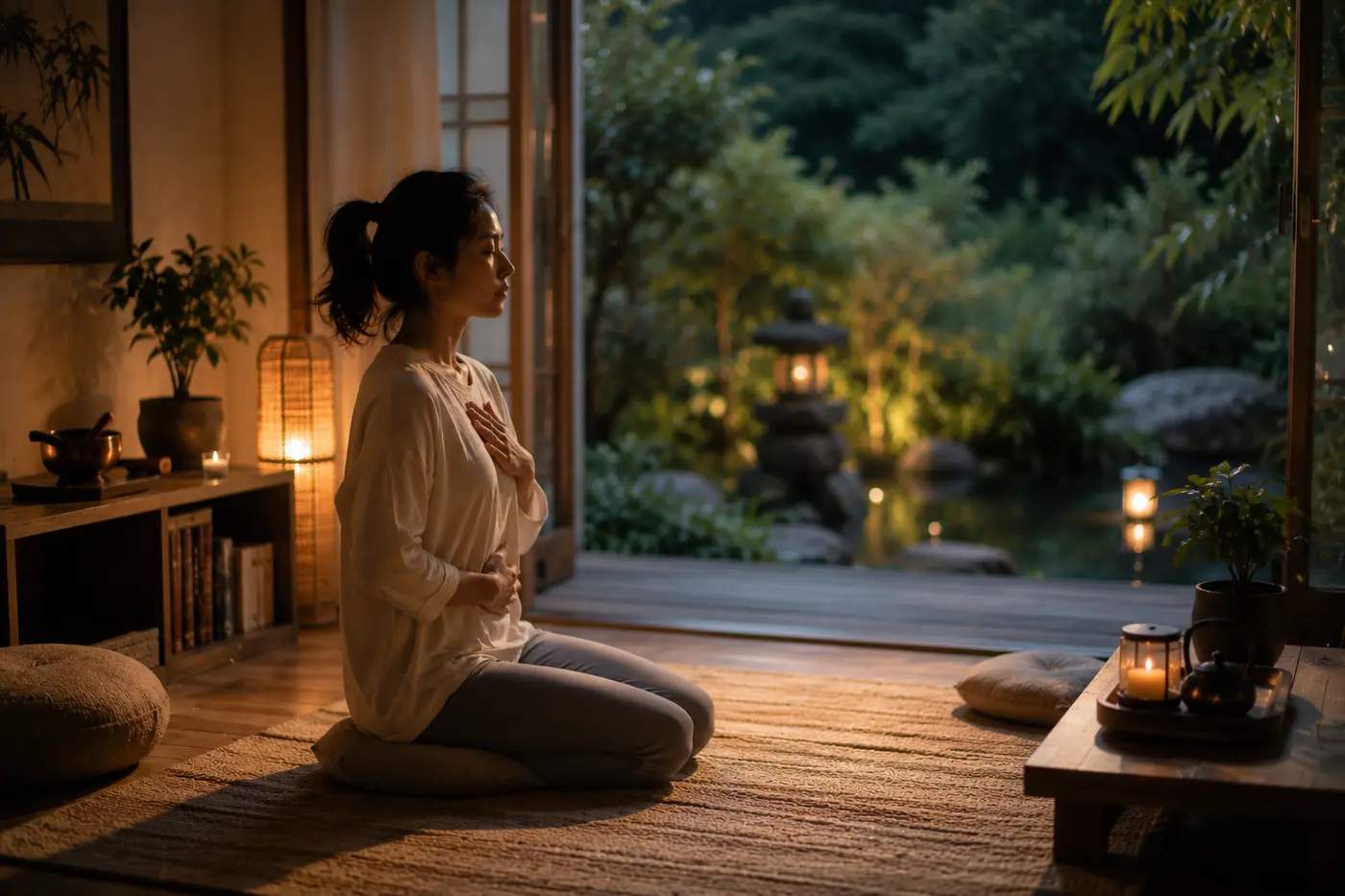
Why create meditation music with SunoPrompt
A meditation track has to do a quiet job well. It needs to hold attention without grabbing it.
Built around practice, not mood alone
The form asks what the meditation is for. Breathwork, body scan, yoga, and mindfulness all need different pacing. A mood word like 'calm' is not enough. The practice gives the AI a functional brief.
Better prompts for breath timing
You can write timing instructions in plain language: 'long exhale,' 'one bell every few breaths,' 'no sudden volume changes.' Those details help shape breathwork music that feels usable instead of random.
Space for guided voice
Guided meditation music should not crowd the speaking range. You can ask for low pads, sparse bells, and no lead melody, which leaves more room for spoken instructions or a teacher's voice.
Fresh tracks for repeated practice
Using the same meditation track every day can make the mind predict each shift. Generating variations lets you keep the same practice structure while changing the surface texture.
Connected to the rest of the toolkit
Meditation music often sits beside scripts, voice recordings, and edited audio. SunoPrompt keeps music generation, lyric drafting, and vocal separation close enough that one idea can move across tools.
Full toolkit
Meditation music is one calm corner of SunoPrompt
Use this focused page when the session needs stillness, breath, and attention. Use the wider SunoPrompt toolkit when you want to write lyrics, make full songs, or separate parts of an audio track.
AI Meditation Music Generator
Create meditation music from a practice goal, sound texture, breath pace, and mood. Good for mindfulness, breathwork, yoga, body scan, and calm focus sessions where the music needs to support attention rather than steal it.
AI Music Generator
Use the broader music generator when the idea goes beyond meditation. You can make ambient, classical, yoga, sleep, or focus tracks from a fuller description, then use the themed page again when you want a tighter meditation brief.
Lyrics Generator and Vocal Remover
Draft spoken lines for a guided meditation with the Lyrics Generator, then create music around the script. If a generated track has a vocal element you do not want, use Vocal Remover to separate parts and keep the bed cleaner.
Explore more AI music tools
Who creates meditation music with SunoPrompt
Meditation teachers
Create original beds for breathwork, body scan, loving-kindness, or open awareness sessions without reusing the same stock loop.
Write the session pacing into the prompt, such as 'one soft bell before each instruction' or 'long silence between phrases.'
Generate different textures for different classes: warmer for evening practice, clearer for morning mindfulness, slower for deep relaxation.
What is an AI meditation music generator?
An AI Meditation Music Generator creates calm, structured music for meditation practice from a few guided details. You describe the practice, breath pace, mood, and sound texture, then SunoPrompt generates music shaped for mindfulness, breathwork, yoga, or guided meditation sessions.
Meditation music needs an anchor
The listener needs something subtle enough to avoid distraction but clear enough to return to. That is the anchor. It might be a bell, a drone, a slow pulse, or a repeated tone. If you write 'soft bell every few breaths, low drone underneath,' the track can give attention a recurring point without turning into a song with a chorus.
Breath pace changes the whole track
Breathwork music has to respect timing. A track for four-count breathing should move differently from one built for long exhales or open awareness. Write 'inhale for four, exhale for six, no sharp hits' and the AI has a pacing rule. That rule affects spacing, volume changes, and how often new elements appear.
Guided sessions need less musical drama
If someone is speaking over the track, the music has to leave space. Guided meditation music works best when the midrange stays uncluttered, because that is where the human voice sits. Tell the generator 'leave room for spoken guidance, low pads, no lead melody' and the output can sit underneath a teacher instead of competing with them.
Mindfulness music is different from spa music
Spa music often tries to feel pleasant from the first second. Mindfulness music has a job: support attention. It can be beautiful, but beauty is not the whole point. A mindfulness music generator should help create a stable listening field, where the sound gives the mind a place to return when it drifts.
The long field is where the practice becomes specific
Generic prompts produce generic calm. Specific practice notes produce better meditation music. Write '10-minute evening body scan, start at the feet, warm low tones, tiny chime when attention moves upward' and the output has structure. Write 'calm ambient music' and the AI has less to work with.
How this differs from generic AI music tools
A general music generator often tries to make the track interesting. Meditation music often needs the opposite: fewer changes, softer entries, and clear spacing. This page frames the prompt around practice, breath, and attention instead of genre first.
A sleep track is successful when you stop noticing it. A meditation track can stay present. It gives the listener a repeatable sound object, so wandering attention has somewhere to return without breaking the session.
A normal ambient prompt might ask for mood only. This meditation music generator prompt also asks for use case: guided session, yoga class, breathwork, body scan, or focus reset. The use case changes the arrangement.