AI R&B Generator
Loading...
How to make R&B with AI
Pick the era and sub-style
90s slow jam, modern trap soul, neo soul, alternative R&B. The sub-style determines drum sounds, chord voicings, vocal processing, and arrangement density. R&B changed dramatically decade by decade. Be specific about which version you want.
Describe the emotional situation
In the long field, write the moment. Not a genre description. A scene between people, or a feeling you're sitting with alone. R&B lyrics come from private emotional situations. The more specific and honest, the better the lyrics land.
Generate and listen to the vocal
Hit Generate. The vocal is the verdict. If the runs feel right but the lyrics miss, rewrite the situation with more detail. If the tempo is off, adjust the style tag. The voice should feel like it belongs in the moment you described.
Production built around the voice, not competing with it
In most genres, the vocal is one layer in the mix. In R&B, the vocal IS the mix. Everything else exists to make the voice sound better. The kick sits low. The keys fill the mid-range but duck when the singer enters. The hi-hats keep time without drawing attention. The AI generates with this hierarchy. The production carves space in the frequency spectrum specifically for the vocal to sit in. Chord pads sustain underneath but thin out during vocal phrases. Drum patterns stay in the pocket without fills that compete with vocal runs. When the singer goes into a falsetto passage, the arrangement drops to give it room. This is the mixing philosophy R&B producers use, and the AI builds it into the generation.
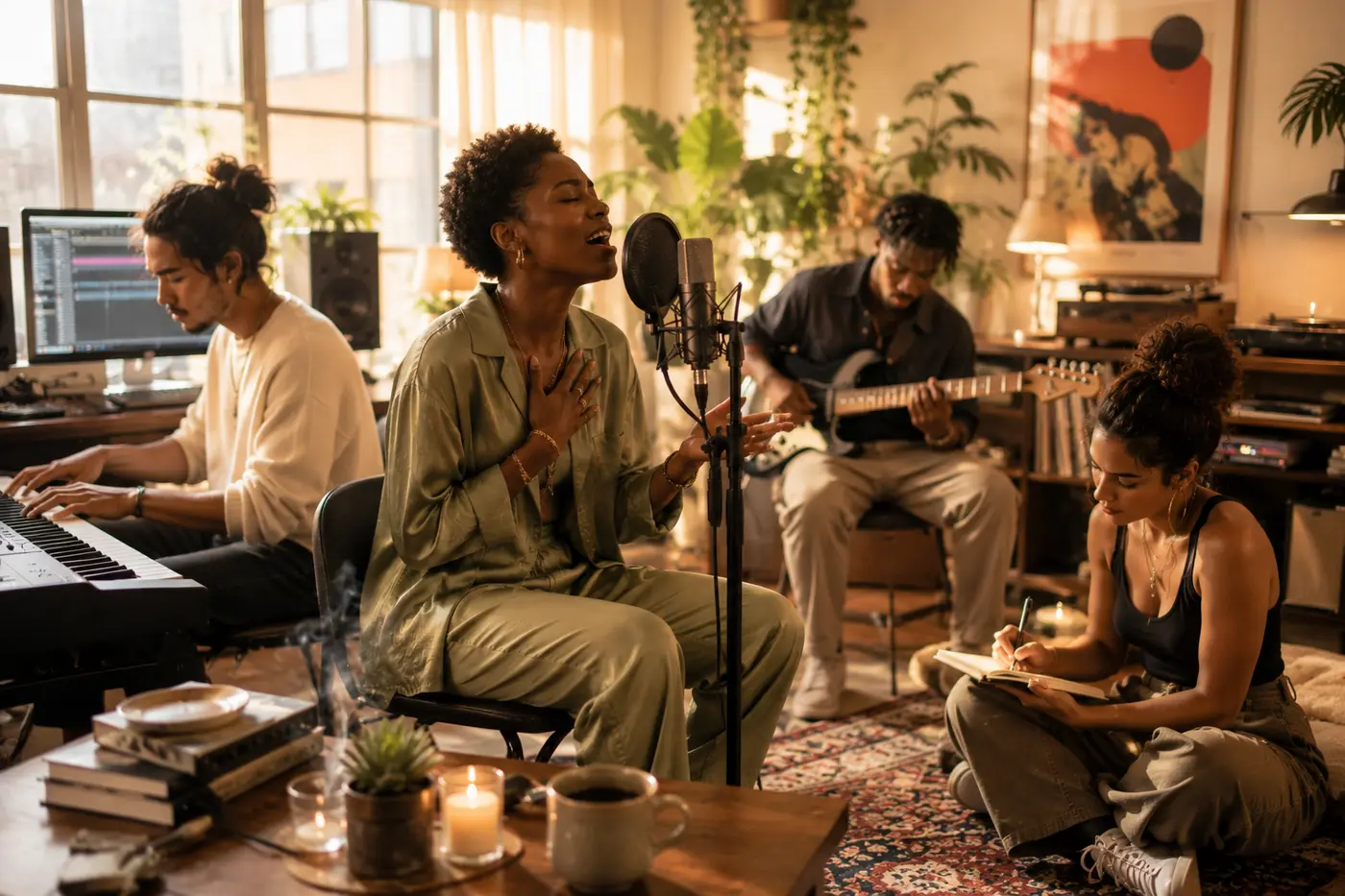
Describe the moment between two people, the AI writes the song
R&B songs live in specific emotional situations. Not 'love' in the abstract. The drive home. The unsent text. The first time someone stays the night. The form asks for that level of specificity. The short fields set up the context: who the song is about, the occasion, and an R&B sub-style. The long field is where you describe the moment. Write the situation you're in or the situation you want the song to capture. 'Standing in the kitchen at midnight, we're not fighting but we're not talking either, the faucet is dripping, someone needs to say something first.' That gives the AI a complete emotional scene to build around. The lyrics come from the tension. The melody follows the mood.

Why make R&B with SunoPrompt
R&B production requires vocal talent, a producer who understands the genre's mixing conventions, and studio access. This starts with the situation you're in and delivers the finished track.
Vocal-forward mixing by default
The AI places the voice at the center of the mix and shapes everything else around it. Bass stays low, keys duck during vocal phrases, drums keep the pocket without competing. This is the R&B mixing philosophy, and it's built into the generation rather than applied after.
Era-specific production fingerprints
90s gets lush harmonies and warm pads. 2000s gets sharper drums and processed vocals. 2020s gets sparse 808s and atmospheric space. Each decade of R&B developed its own sonic identity. The AI reproduces these distinctions from a style tag rather than blending them into a generic R&B sound.
Extended harmony without theory knowledge
R&B chord progressions use sevenths, ninths, and suspensions that create emotional tension. You don't need to know what a minor ninth is. Write 'neo soul' and the chords get jazzy. Write '90s slow jam' and they get sweeter. The style tag loads the harmonic language automatically.
Emotional specificity in the lyrics
The AI writes from the situation you describe, not from R&B cliches. 'The way you fold laundry while humming' produces a different song than 'I love you.' Private moments, small details, and unfinished feelings make better R&B lyrics than grand declarations. The story field is designed for that kind of honest input.
Vocal technique baked into the generation
Runs, falsetto flips, breathy drops, ad-libs between lines. These aren't post-production effects. The AI generates the vocal performance with R&B technique built in, adjusted for sub-style: elaborate melisma for 90s ballads, restrained delivery with occasional breaks for modern R&B.
Full toolkit
R&B is the vocal showcase, the toolkit fills in the rest
The AI R&B Generator handles the full song. SunoPrompt's other tools cover stand-alone lyric writing, production in other genres, and stem separation for working with generated R&B tracks.
AI Music Generator
R&B shares borders with pop, hip hop, gospel, and jazz. When your project needs to cross into one of those spaces, the main generator handles the genre shift. Useful for albums that move between R&B and adjacent styles.
Lyrics Generator
R&B lyrics need emotional precision: specific situations, not abstract feelings. Feed the Lyrics Generator your mood and a sub-style: 'neo soul lyrics about missing someone who moved on before you were ready.' The output matches R&B phrasing conventions and emotional register.
Vocal Remover & Stem Splitter
Isolate the vocal from a generated R&B track to study the runs and phrasing. Pull the beat to use as a backing track for your own singing. Separate the bass to hear how the 808 or bass guitar sits under the vocal. R&B production is layered, and hearing stems individually reveals the arrangement logic.
Explore more AI music tools
Who creates R&B with this
Singers and vocalists
Generate backing tracks in your preferred R&B sub-style to sing over and practice vocal technique
Hear how your emotional concept sounds as a finished R&B production before investing in studio time
Create demo tracks that showcase your vocal ideas for collaborators, producers, or social media
What is an AI R&B generator?
An AI R&B Generator creates complete rhythm and blues tracks from a mood description and style tag. You describe an emotional situation, choose an R&B sub-style, and the AI produces a song with featured vocals, layered harmonies, and production built to showcase the voice. No studio session, no vocal coach, no production suite.
The voice is the instrument, everything else is the frame
In rock, the guitar leads. In EDM, the beat leads. In R&B, the voice leads and everything bends around it. The bass line stays low to keep the vocal's frequency range clear. The chord pads sustain but pull back when the singer phrases. The drums provide pulse without asserting themselves. This hierarchy is what makes R&B sound like R&B. The AI generates with the voice mixed forward and the production mixed to support. If you listen to a generated R&B track and the guitar is louder than the vocal, something went wrong. That won't happen here because the genre's mixing conventions are built into the generation.
Decades that sound nothing alike
90s R&B used live-feeling drum programming, lush multi-layered vocal harmonies, and warm analog synth pads. Groups like Boyz II Men stacked four-part harmonies on top of sweeping string arrangements. 2000s R&B sharpened the drums, added more vocal processing, and leaned toward individual vocal showcase over group harmony. Modern R&B strips the production back further: 808 bass, atmospheric reverb, sparse melodies, and a vocal that floats in negative space. Write the decade in the style field and the AI loads the production fingerprint of that era. The chord progressions, drum sounds, and vocal treatment all shift.
The mood field as a private conversation
R&B lyrics come from the moments you don't post about. The text you regret sending. The jacket that still smells like someone. The way a room feels after an argument when nobody's left but nobody's okay. Write those situations into the mood field. 'Saw her name come up on my phone and let it ring because I don't know what I'd say yet' gives the AI a lyric seed that's specific, conflicted, and honest. The AI writes verses around that tension. If you write something general like 'love and heartbreak,' the lyrics come back general. R&B rewards vulnerability in the input.
Chord language in R&B: extended and unresolved
R&B harmony doesn't sit on simple triads. Seventh chords are the baseline. Ninths and elevenths are common. Suspended chords that don't resolve create a floating, unfinished feeling that matches the emotional ambiguity R&B lyrics often carry. The AI generates with these extended voicings. A 90s R&B track gets major sevenths and diminished passing chords. A neo soul track gets minor ninths and chromatic bass movement. A modern R&B track might sit on two chords for the entire song, but those chords are voiced with enough upper extensions to stay interesting. You don't need to know chord theory. The sub-style tag loads the appropriate harmonic vocabulary.
Vocal technique the AI reproduces
R&B singing has specific techniques. The run: a rapid series of notes that decorates the end of a phrase. The flip: a quick jump from chest voice to falsetto and back. The ad-lib: improvised vocal fills between lyric lines that add emotion and personality. The breathy drop: pulling the volume down to a whisper on a key word. The AI generates with all of these. A slow jam gets longer, more emotional runs. An uptempo track gets shorter, rhythmic ad-libs. The sub-style affects how much ornamentation the vocal carries. 90s R&B tends toward elaborate runs. Modern R&B tends toward restrained delivery with occasional falsetto breaks.
How this differs from a generic AI music tool
Generic AI tools mix the vocal as one of several equal elements. R&B mixes the vocal as the centerpiece with everything else shaped around it. The AI generates with this vocal-forward hierarchy so the production serves the singer rather than competing with them.
Most generators use simple chord progressions. R&B requires extended harmonies: sevenths, ninths, suspended chords that stay unresolved. The AI composes with these voicings because they create the emotional ambiguity R&B depends on.
A standard tool generates vocals with consistent delivery throughout. R&B vocals shift between chest voice, falsetto, whisper, and full belt within a single verse. The AI produces these dynamic shifts because they are the vocal vocabulary of the genre.
Other generators treat every decade of R&B the same. 90s and 2020s R&B share a name but almost nothing sonically. The AI loads era-specific production: drum sounds, mix philosophy, vocal processing, and harmonic approach all change with the decade tag.