Guitar Isolator

Sådan isolerer du guitaren i tre trin
Indlæs nummeret
Upload en lokal lydfil eller vælg en sang fra dit bibliotek. En ren kilde adskiller mellemtone bedre end en lav-bitrate rip, der allerede har smurt guitarerne sammen.
Vælg en model, der kan isolere guitar
At trække ét instrument ud er en finere opdeling, så ræk ud efter Echo Advance eller Echo Pro. Echo Basic er den gratis måde at prøve værktøjet på, og et dybere niveau er det, der rent løfter guitaren.
Split og tag den side, du har brug for
Kør Split, og begge kommer tilbage, den isolerede guitar og sporet uden guitar. Lyt efter vokal- eller key-sivning i mellemtone, og hvis et lagdelt mix lod noget blive tilbage, kør det et niveau op.
Fjern guitaren og spil den selv
Den samme split giver også sporet tilbage med guitaren væk. Det hul i arrangementet er din plads. Spil den rigtige del tilbage for at teste den, eller læg din egen version ind over bandet. Guitarister bruger den til at øve sig mod den rigtige sang i stedet for en backing-app, og til at genoptage en del med deres egen tone. Producers bruger den til at re-amme eller udskifte en guitar, mens trommer, bas og vokal forbliver på plads. Én upload, begge sider, modsatte jobs.
Se fingrene i stedet for at gætte
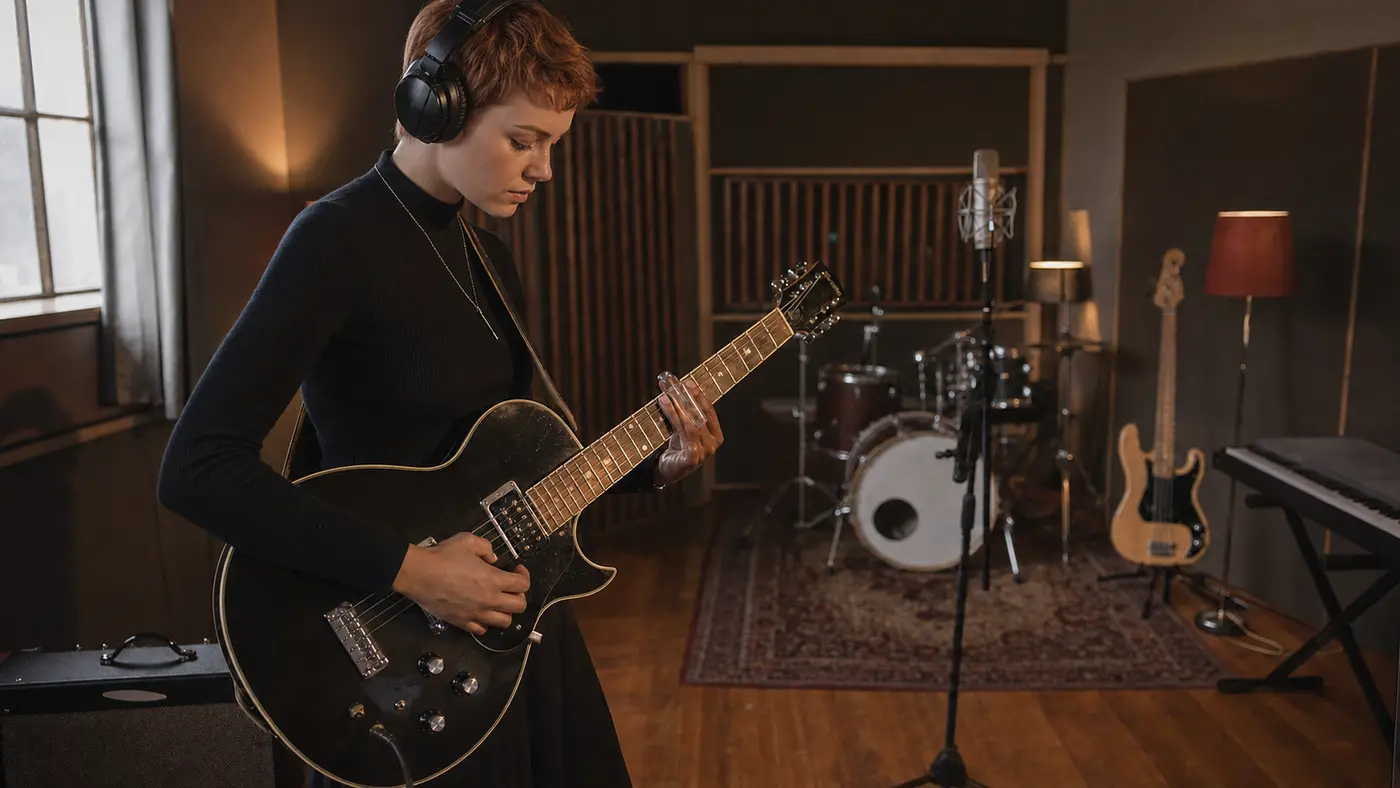
Guitaren bærer den del, musikerne mest ønsker at stjæle, riffet, soloen, voicingen under omkvædet. I det fulde mix er den viklet ind i alt andet, så at arbejde den ud er halvt gætteri. Træk den frem, og bevægelserne bliver klare: den præcise bånd, bendet, om det var én guitar eller tre stablet. Den klarhed er pointen. Et riff, du rent faktisk kan høre, er et, du kan lære node for node, i stedet for at skrabe de samme to sekunder og argumentere med dig selv om, hvad musikeren gjorde.
Hvorfor isolere din guitar her
En guitarisolator, der respekterer, hvordan guitarer er lagdelt, giver dig også siden uden guitar, og er ærlig om, hvad én isolering indeholder.
Riffet, i det fri
Med guitarerne forrest holder noderne, bends og voicingsene op med at være en tåge. Du lærer en del ved at høre den, i stedet for at skrabe de samme sekunder og gætte, hvad musikeren gjorde.
Bygget til at lære guitar
Riffs, soloer og akkordformer er hele årsagen til, at de fleste isolerer en guitar, så klarheden er rettet derhen. Langt bedre end at sænke et mudret fuldt mix og håbe, du fangede fingerspillet.
Siden uden guitar også
Den samme kørsel giver dig sporet med guitaren væk, så du kan spille det rigtige arrangement, optage din egen version, eller re-amme, mens bandet forbliver urørt.
Realistisk om lag
Den behandler en guitarstemme som den stak, den normalt er, fordoblinger og lead sammen, i stedet for at foregive, at en sang har én overdub, der kan trækkes rent ud.
Den arbejder de tætpakkede mellemtone
Guitar deler mellemtone med vokal og keys, så en højere Echo-model trækker den overlapning fra hinanden. Du bruger kun et niveau på de tætte mix, der har brug for det.
Prøv værktøjet, opgrader for delen
Echo Basic lader dig køre værktøjet gratis, og de højere niveauer er, hvor et enkelt isoleret instrument som guitaren kommer rent ud.
Fuld Toolkit
Omkring guitaren
Guitaren er ét lag. Resten af SunoPrompt dækker den fulde nedbrydning, en backing til at solo over, og de dele, du bygger.
AI Stem Splitter
Vil du have trommerne, bassen og resten også, ud over kun guitaren? AI Stem Splitter åbner hele nummeret i separate lag i stedet for det ene, du kom efter.
Instrumental Maker
Vil du have en backing til at solo over? Instrumental Maker trækker vokalen ud af en sang og efterlader et fuldt band-underlag til at øve dine guitarlinjer imod.
AI Music Generator
Genoptager eller omarbejder du? Generer en ny backing eller nye dele ud fra en beskrivelse til at passe omkring den guitar, du beholdt, eller under sporet uden guitar.
Udforsk mere
Hvem isolerer guitaren
Guitarister og studerende
Lær et riff eller en solo node for node med guitarerne forrest
Hør om en del er barré-akkorder eller åbne former
Spil sporet uden guitar tilbage for at tjekke din version mod bandet
Hvad Guitar Isolator gør
Guitar Isolator adskiller guitaren fra en sang, du medbringer, returnerer de isolerede guitarer til at lære og studere og sporet uden guitar til at spille med til, begge dele fra én split.
En guitarstemme er normalt flere guitarer
Én sang har sjældent én guitar. Der er ofte en rytmeguitar fordoblet hårdt til venstre og højre, en lead ovenpå, og måske et rent lag under omkvædene. Isolator trækker hele den stak ud som et guitarspor. Det er ikke kirurgi ned til en enkelt overdub, det er guitarerne, sammen, løftet klart fra trommer, bas og vokal.
Stjæl riffet og se voicingen
Dette er, hvad de fleste kommer efter. Med guitarerne forrest holder riffet, soloen og akkord-voicingsene op med at være en tåge. Du kan høre, om verset er barré-akkorder eller åbne former, fange hammer-ons, og følge en solo frase for frase i stedet for at skrabe den samme passage gentagne gange og gætte.
Eller træk guitaren ud for selv at spille den
Det andet output er sporet med guitaren fjernet. En musiker øver sig på det rigtige arrangement i stedet for en metronom, eller optager en ny version med sin egen tone i det tomme slot. En producer re-ammer eller udskifter guitaren, mens resten af bandet forbliver urørt, hvilket er, hvordan mange omarbejdelser starter.
Mellemtone bliver tætpakket
Her er den ærlige fangst. Guitar lever i mellemtone, det samme travle område som vokal og keys, så lidt af dem kan sive ind i guitarsporet. Det er guitarversionen af separationsproblemer, forskellig fra et kick, der banker ind i bassen. En højere Echo-model arbejder de tætpakkede mellemtone fra hinanden, hvilket er grunden til, at tætte arrangementer er dem, der er værd at have et dybere niveau til.
Ét spor, mange guitarer
Indstil forventningen, før du splitter: en isoleret guitar er normalt alle guitarer på én gang, ikke kun lead eller den ene side af en dobbelt. Hvis en sang havde fem dele stablet, kommer de tilbage som ét guitarspor. Det er stadig nok til at lære af og spille imod, men forvent ikke soloen leveret alene, adskilt fra rytmen under den.
Et dybere niveau for et enkelt instrument
At fjerne vokalen fra en sang er en lavvandet opdeling. At trække kun guitaren ud og lade resten være sammen, er finere arbejde, så det læner sig op ad de højere Echo-modeller. Echo Basic lader dig prøve værktøjet gratis, og Echo Advance eller Echo Pro er, hvor en ren, isoleret guitar rent faktisk kommer ud.
Hvordan den adskiller sig fra andre udtrækkere
Den håndterer den lagdelte virkelighed af guitar. En del er normalt flere stablede, og denne løfter dem ud som ét brugbart guitarspor i stedet for at foregive, at der kun er én.
Én split, to outputs. Du får den isolerede guitar til at lære og sporet uden guitar til at spille med til, ikke et enkelt resultat.
Den arbejder de tætpakkede mellemtone, det guitarspecifikke problem. Højere Echo-niveauer trækker guitar ud fra vokal og keys, der deler dens område.
Det er det guitarfokuserede udtræk af den fulde stem-split. Når du vil have hver del for sig, åbner AI Stem Splitter hele mixet.