AI Kids Song Generator
Loading...
How to make a kids song with AI
Enter the child's name and a topic
Type the child's name and a short label for what the song is about. "Bedtime" and "dinosaur adventure" need very different songs. The topic sets the direction.
Describe their world and pick a mood
Write what the child is into, afraid of, or learning in the story field. Then set the mood. "Silly and bouncy" for play time. "Soft and slow" for sleep. The AI reads both.
Generate and play it for them
Full track in under a minute. Play it once. Watch their face when they hear their name. If you want a different version, change the mood or story and generate again.
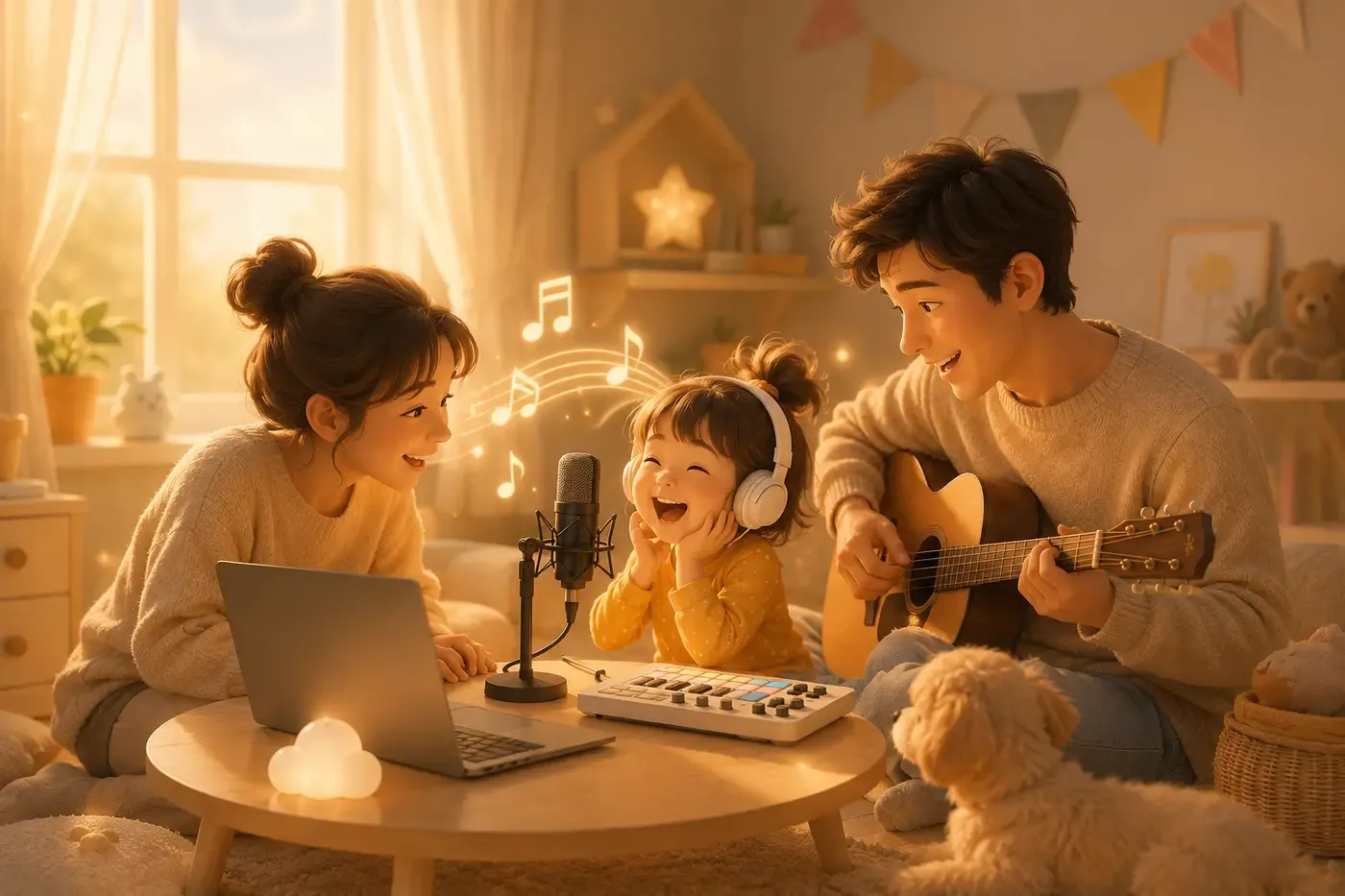
A three-year-old hears their name in a song and the whole room stops.
Adults hear a personalized song and think it's nice. Kids hear their name in a song and believe it was made for them by the universe. That reaction is the whole point. The Voice Gender selector matters here more than you'd expect. Some kids respond to a female voice for lullabies and a male voice for action songs. Some prefer the opposite. Random sometimes produces a voice the child latches onto. You keep all versions.
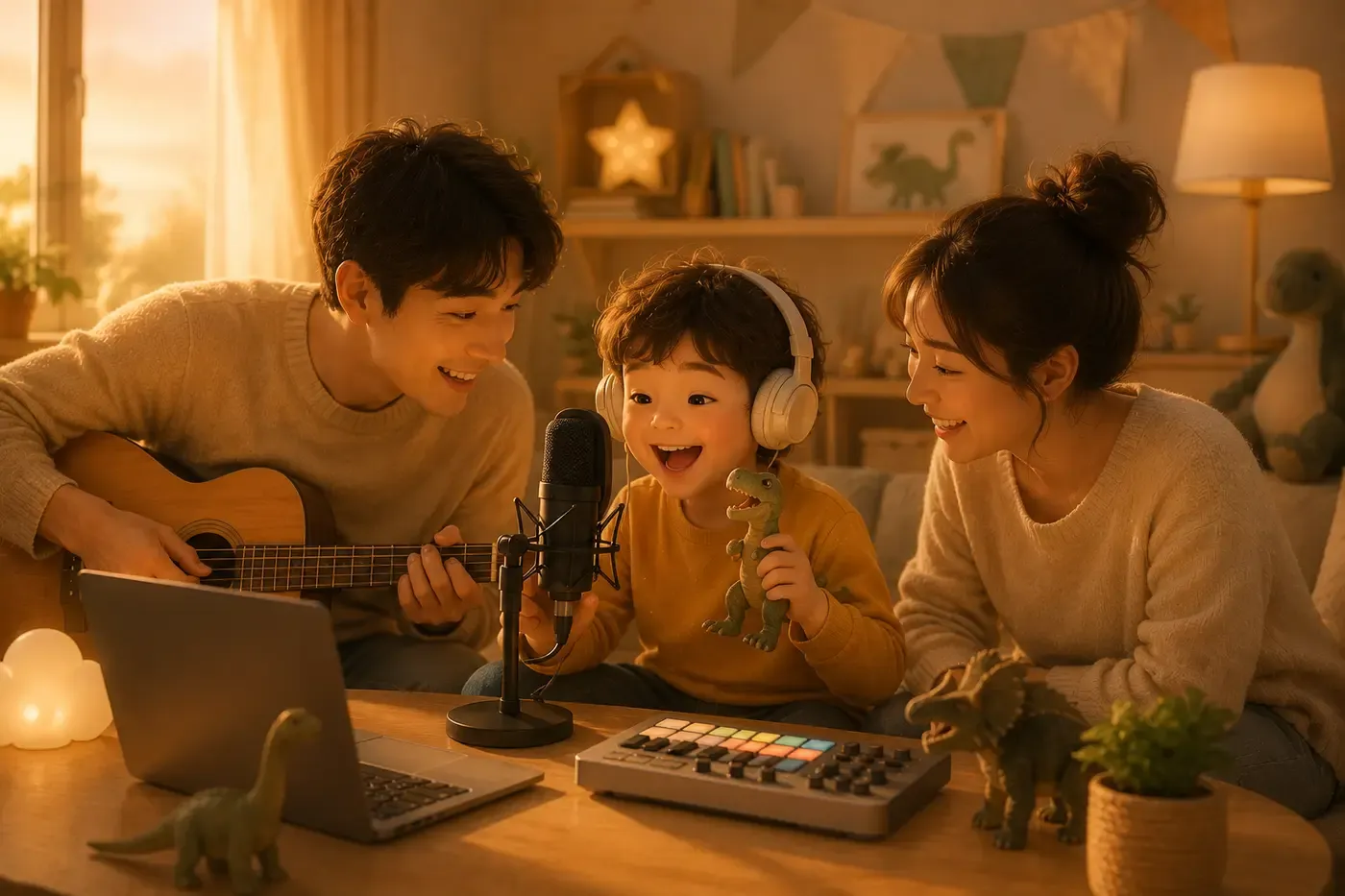
The song about dinosaurs works this month. Next month it's trains.
Kids move fast. The thing they're obsessed with today won't last. A custom kids song catches the phase while it's happening. You write what the child cares about right now in the story field. Potty training. A new baby brother. The neighbor's dog. The AI kids song maker builds lyrics around that specific detail and produces a track with their name in it. Three months from now, you'll play it back and remember the phase exactly.
Why use SunoPrompt's children's song generator
A custom kids song should sound like it knows your child. Here's why this AI song maker for kids does that.
Their name is in the song
Not pasted on. Not spoken before the music starts. Sung inside the verses and chorus, placed where it fits the melody. Kids react to this in a way that's hard to overstate.
It matches the phase
Whatever the child cares about this week goes into the story field. Dinosaurs, a loose tooth, the new baby. The song is about their life right now. Next month, make a new one.
Different songs for different moments
Bedtime and car rides aren't the same mood. Generate separate tracks for each routine using the same name but different stories. A lullaby and a dance song can coexist in the same history.
Ready before the moment passes
Under a minute. You can generate a song while the child is in the other room. By the time they come back, there's a song about them waiting.
No screen time for the child
The output is audio. The child listens. No app to stare at, no video to watch. You made something. They hear it. That's the whole interaction.
Full toolkit
Kids songs are one part of SunoPrompt's music studio
The AI behind the kids song generator also runs a complete music creation suite. Same engine, different inputs. Original tracks in any genre, standalone lyrics, and audio separation tools all sit in the same workspace.
AI Music Generator
The broad version of the same engine. Any genre, any audience. If you want to make something for yourself after the kids are asleep, this is where you go.
AI Lyrics Generator
Write song lyrics as text before adding music. Useful if you want to preview and edit the words of a kids song before the AI sings them. You can check that the vocabulary fits your child's age.
Vocal Remover & Stem Splitter
Separate vocals from instrumentals in existing songs. If your child loves a particular melody but you want their name sung over it, isolate the instrumental and use it as reference for a new generation.
Explore more AI song generators
Who uses the AI kids song generator
Parents and caregivers
Make a bedtime song, a morning song, a toothbrushing song, each with the child's name and current interests
Generate during nap time. Under a minute. No music experience needed.
Build a small rotation of personalized songs for different routines. Kids start requesting them within days.
What is the AI kids song generator?
The AI kids song generator on SunoPrompt makes original songs for children using their name, their interests, and a mood you choose. You describe what the child cares about. The tool writes lyrics and produces a vocal track built around those details.
The story field captures the phase
Kids are specific. A three-year-old who loves fire trucks doesn't care about a generic vehicle song. Write "obsessed with the red fire truck on Maple Street, waves at it every walk" and the AI builds a song about that fire truck. Write "afraid of thunder but okay if we count the seconds between lightning and boom" and you get a different song entirely. The story field is where the child's actual life enters the lyrics.
How the child's name works in the song
The name field feeds directly into the lyric composition. The AI places the name where it fits the rhythm of the melody. For kids, this is the magic part. A toddler who hears "Emma" in a chorus doesn't analyze it. They point at themselves and grin. Older kids recognize that the song is about them specifically, which changes how they listen.
Mood shapes the type of kids song
"Lullaby" and "dance party" are both kids songs, but they share nothing musically. The mood field tells the AI what kind of track to build. Write "calm, repetitive, sleepy" for bedtime. Write "loud, fast, silly" for a rainy afternoon. You can also mix: "gentle but a little funny" works for a song about a toddler who fights nap time.
Voice gender and how kids respond
Some children calm down to a female voice at night and get energized by a male voice in the morning. Others have no pattern. The Voice Gender selector lets you test. Random is useful because kids sometimes pick a favorite voice that surprises you. All versions save, so you can let the child choose.
One child, many songs
Bedtime needs a different song than toothbrushing. Car rides need a different song than bath time. You can generate a separate track for each routine, each using the same name but different stories and moods. Parents who build a small rotation of 4-5 custom songs report that kids request them by name within days.
How this kids song maker compares to generic AI music tools
Streaming playlists for kids are background noise. They're not about your child. A personalized kids song with their name and their current obsession is a different category. The child knows it's theirs.
Generic AI music generators ask you to write a prompt and pick a genre. They don't know what makes a children's song work: repetition, simple vocabulary, name placement, and age-appropriate pacing. This tool is shaped around those needs.
Most AI song tools produce music for adults. The output vocabulary, tempo, and structure assume an adult listener. The AI kids song generator adjusts all three based on what you describe in the story and mood fields.
A parent shouldn't need to learn a DAW or write a structured music prompt. Four fields and a voice selector. That's the entire interface. The result is a finished track, not a project file.