AI Metal Song Generator
Loading...
How to make metal with AI
Choose your sub-genre precisely
Metal has more sub-genres than most genres have songs. Be specific: 'melodic death metal' not just 'metal.' The sub-genre determines tuning, tempo, vocal style, drum pattern, and riff vocabulary. This is the most important field.
Describe the intensity in images
In the long field, write what the song should feel like physically. Charging, collapsing, suffocating, detonating. Metal is a physical genre. The more visceral your description, the more the AI has to work with.
Generate and check the riff
Hit Generate. The riff is the verdict. If it doesn't hit, adjust the sub-genre tag or push the mood field harder. 'Heavier, slower, more menacing' or 'faster, tighter, relentless.' Small language changes produce real shifts in riff character.
The gap between quiet and crushing is where metal lives
Metal that stays at maximum volume for three minutes is tiring, not heavy. The heaviest moment in a metal song only works because something quieter came before it. A clean guitar passage. A bass intro. A half-whispered verse before the drums detonate. The AI generates with this dynamic logic. A melodic death metal track might open with an acoustic intro, build through a mid-tempo verse, and then collapse into a blast-beat chorus. A progressive metal track might alternate between clean, intricate passages and wall-of-sound sections three or four times. The sub-genre and mood description together tell the AI how much contrast to use and where to place the heaviest moment.
The sub-genre tag loads a different riff vocabulary
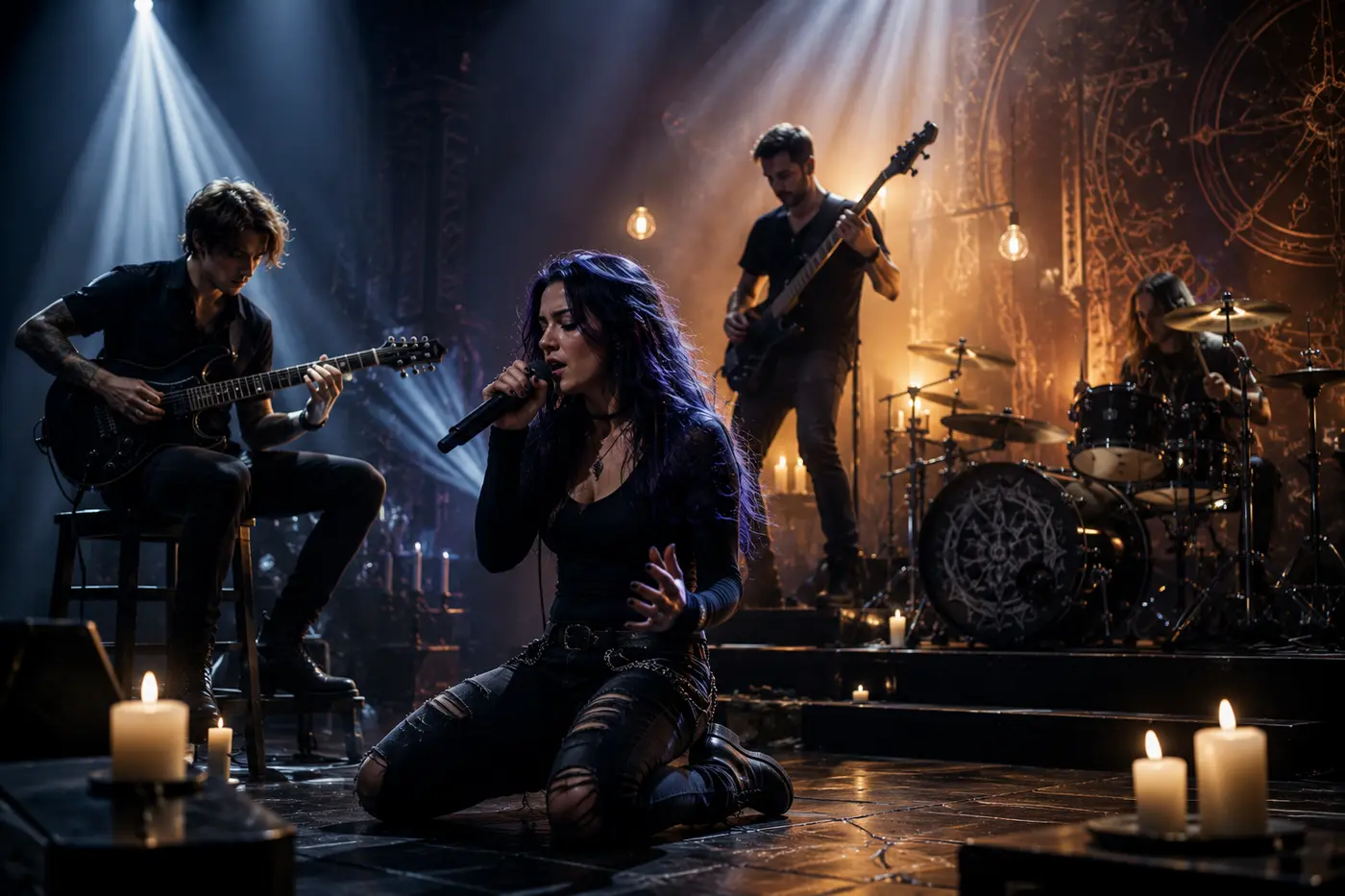
Metal sub-genres aren't variations on a theme. They're separate traditions with different rules for everything: how the guitar is tuned, where the drums sit in the mix, whether the vocals are sung or screamed, how fast or slow the riff moves. The style field is where you choose which tradition the AI draws from. 'Thrash metal' loads fast alternate picking, tight palm mutes, and a snare sound that cuts. 'Doom metal' loads slow tempo, massive sustain on every chord, and a bass tone that vibrates your sternum. The long field adds color within that framework. 'Volcanic eruption, everything burning, nowhere to run' pushes a thrash track harder than 'controlled aggression, surgical strikes.'
Why make metal with SunoPrompt
Metal production requires a band, a studio that can handle the volume, and an engineer who knows how to mix distortion without losing clarity. This replaces all of that with a text description.
Sub-genre precision from a text tag
Typing 'thrash metal' versus 'doom metal' doesn't adjust one parameter. It changes the tuning, the tempo, the picking technique, the drum pattern, and the vocal approach. Each sub-genre tag loads a complete production identity because metal sub-genres are that different from each other.
Dynamic contrast built in
The AI doesn't generate three minutes of maximum distortion. It builds quiet passages before heavy ones because the contrast is what makes the heaviness land. A clean guitar intro makes the first distorted chord feel like a wall. The AI paces these contrasts based on sub-genre conventions.
Vocal technique matching
Growls for death metal. Shrieks for black metal. Soaring cleans for power metal. Screamed verses with sung choruses for metalcore. The AI generates with the appropriate vocal technique rather than singing normally over distorted guitars. You can mix approaches within one track by describing it in the mood field.
Riff-first composition
In metal, the riff is the song. The AI composes the guitar riff as the central element and builds everything else around it: drums that lock to the riff's rhythm, bass that doubles or diverges from the riff's root notes, vocals that sit in the spaces between riff phrases. This priority order matches how metal bands actually write.
Full toolkit
The riff is the core, here is the rest
The AI Metal Song Generator covers the track itself. SunoPrompt's other tools handle lyrics, other genres, and audio separation for when you want to isolate specific parts of your generated metal track.
AI Music Generator
When your project needs a non-metal track. An acoustic interlude, an ambient intro, a clean outro. The main generator handles any genre. Useful for albums or projects that move between heavy and non-heavy material.
Lyrics Generator
Metal lyrics range from abstract imagery to narrative storytelling to political rage. Feed the Lyrics Generator your sub-genre and mood: 'doom metal lyrics, ancient ruins, slow collapse' or 'thrash lyrics, societal rot, fast and angry.' The output matches the genre's lyrical conventions.
Vocal Remover & Stem Splitter
Isolate the guitar riff from a generated metal track to hear it without drums and vocals. Pull the drums out to study the pattern. Strip the vocals to get an instrumental version for practicing guitar along with. Metal tracks have dense layers, and hearing them separately reveals how the arrangement works.
Explore more AI music tools
Who creates metal with this
Metal fans who want to hear their ideas
Describe the metal track you've had in your head and hear it as a finished song for the first time
Explore sub-genres you've read about but never found enough music in: blackened doom, atmospheric sludge, folk metal
Generate tracks for your gym playlist, road trip, or late-night listening that match your specific intensity preference
What is an AI metal song generator?
An AI Metal Song Generator produces complete metal tracks from a sub-genre tag and an intensity description. You name the metal style, describe the feel, and the AI builds a track with appropriate riffs, drums, bass, and vocals. No guitar, no amp, no home studio, no band.
Sub-genres are not settings, they are different languages
Thrash metal and doom metal share a name but almost nothing else. Thrash runs at 180+ BPM with tight, angular riffs and a snare drum that sounds like a gunshot. Doom sits at 60 BPM with monolithic chords that sustain for entire bars and a bass tone thick enough to feel in your teeth. Death metal uses tremolo picking and blast beats. Black metal uses tremolo picking too, but in a completely different tonal register with lo-fi production and shrieked vocals. The style field isn't a slider. It's a language selector. The AI composes differently for each sub-genre because each sub-genre has its own grammar.
What the mood field does to a metal track
Write 'charging through a wall, nothing stops the momentum' and you get a track that stays aggressive from the first riff. Write 'something massive and slow rising from the ocean floor' and the track opens with ambient noise, introduces the bass first, then lets the guitar enter one chord at a time. Write 'clinical precision, every note intentional, no wasted movement' and the riffs tighten, the drums get more technical, and the arrangement strips out anything loose. The mood description shapes the riff's character, the arrangement's density, and the production's texture. Metal fans know what they want to feel. The mood field is where you name that feeling.
Vocals across the metal spectrum
Power metal wants a vocalist who can hit high notes and sustain them over a galloping riff. Death metal wants a low growl that sits in the same frequency range as the guitars. Black metal wants a shriek that sounds like it's coming from the treeline. Metalcore wants both: screamed verses and sung choruses. The Voice Gender selector picks the base tone. Male vocals in death metal go deep and guttural. Female vocals in symphonic metal go operatic. The sub-genre tag shapes the delivery. If you want a specific split, write it: 'screamed verses, clean female chorus' and the AI follows.
Drums in metal: more than just speed
Metal drumming isn't about playing fast, though some sub-genres demand it. It's about what the kick drum is doing relative to the guitar riff. In thrash, the kick locks to the palm mutes in the riff, creating a wall of rhythmic aggression. In doom, the kick hits once per bar and lets the note ring. In blast-beat sections of death or black metal, the kick is a continuous roll that turns the low end into texture rather than rhythm. The AI generates drum parts that serve the sub-genre's conventions. A groove metal track gets a half-time feel that makes the riff swing. A progressive metal track gets odd-time signatures and fills that cross bar lines.
The breakdown, the solo, and the outro: structural landmarks
Metal tracks have structural moments that don't exist in other genres. The breakdown: a half-time riff where the tempo drops and every note lands like a hammer. The guitar solo: a section where the lead guitar takes over and the rhythm section holds a repeating figure underneath. The outro: sometimes a fade, sometimes a final riff that stops dead, sometimes a return to the clean intro. The AI places these landmarks based on sub-genre. Metalcore gets a breakdown in the back half. Progressive metal gets a solo section in the middle. Thrash might end on a riff that accelerates until it cuts off. You can request specific placement: 'breakdown after the second chorus' or 'no solo, all riff.'
How this differs from a generic AI music tool
Generic tools generate distorted guitar by turning up gain on a clean tone. Metal riffs require specific picking techniques, tuning, and rhythmic precision that the AI builds into the generation. Palm mutes, tremolo picking, and power chord voicings are composed, not filtered on.
Most AI generators default to 4/4 at moderate tempo. Metal ranges from 60 BPM doom to 220 BPM thrash, and some sub-genres use odd time signatures. The AI matches tempo and meter to sub-genre conventions rather than defaulting to a standard groove.
A standard tool treats vocals as singing. Metal vocals include growling, screaming, shrieking, and various blends with clean delivery. The AI generates with the appropriate vocal technique for each sub-genre rather than applying a single vocal style to all genres.
Other generators produce arrangements at consistent intensity. Metal needs dynamic extremes: a quiet passage that makes the next riff feel twice as heavy. The AI builds contrast between sections because that contrast is the source of metal's impact.