AI Sleep Music Generator
Loading...
How to create sleep music with AI
Pick a texture and context
Choose a sleep style: ambient drone, piano and rain, nature sounds, warm pads. Then note the context: bedtime, nap, meditation, calming a restless mind. The context tells the AI how much the track should do versus how much it should leave alone.
Describe your version of quiet
In the long field, write what calm feels like to you. A specific room, a specific temperature, a physical sensation. The AI translates your sensory description into a sound environment. The more physical and specific, the more personal the result.
Generate and close your eyes
Hit Generate. The real test is whether the track lets you stop thinking about it. If something grabs your attention, it needs to be softer. Regenerate with 'even less, more space, fewer notes.' The goal is music you forget is playing.
Music that gets quieter as it goes, not louder
Most music builds toward something. Sleep music builds toward nothing. The opening is the most present moment. From there, elements gradually thin, the volume drifts down, and the texture softens until the track is barely there. The AI generates with this fade logic. The first minute has the most musical content. A soft piano phrase, a pad chord, maybe a distant nature texture. By the midpoint, one of those elements has dropped out. By the end, what remains is so quiet it blends with the silence of the room. This pacing mirrors how your attention dissolves as you fall asleep. The music follows you down.
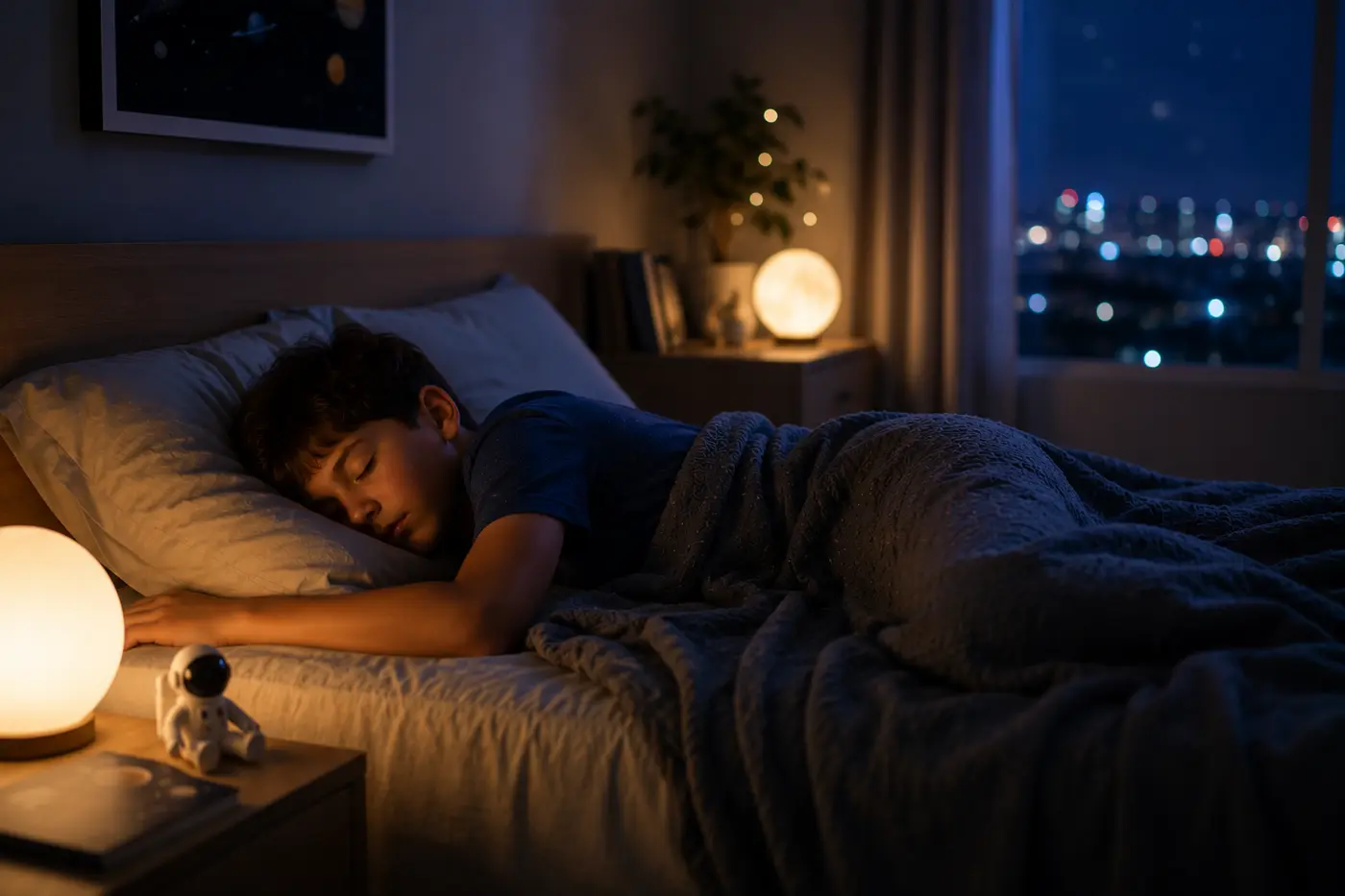
Describe what calms you, the AI builds the sonic version
Sleep is personal. What calms one person keeps another awake. The form asks for your version of calm, not a generic setting. The short fields frame the context: who needs to sleep, the situation, and a style tag. The long field is where you describe what actually works for you. 'The sound my apartment makes at 2 AM when the heat clicks on and the fridge hums' is a better sleep music brief than 'relaxing and peaceful.' The AI reads your sensory description and builds a sonic environment that matches it. Warm low-frequency drones for the heater. A subtle electrical hum for the fridge. Silence between them for the late-night stillness.
Why make sleep music with SunoPrompt
Sleep apps play the same 20 tracks on rotation. This creates something new every time, matched to what your specific brain needs to stop.
Music designed to disappear
The AI generates tracks that fade in energy over time. No hooks to hum, no beats to follow, no changes to anticipate. The composition is built to release your attention rather than hold it. The best outcome is that you don't remember the ending.
Your version of quiet, not a generic one
Describe the sensory details of what calms you: a specific room, a specific weight, a specific temperature. The AI translates physical descriptions into sonic textures. Your sleep track sounds like your version of peace, not someone else's.
Nature sounds that evolve, not loop
Rain that varies in intensity. Ocean that shifts in distance. Wind that gusts and settles. The AI composes these textures as part of the arrangement rather than splicing a 30-second sample on repeat. Your brain can't detect a loop point because there isn't one.
New tracks so your brain doesn't adapt
The same sleep sounds every night eventually become familiar enough that your brain starts listening for them instead of ignoring them. Generating a fresh track each week keeps the stimulus below the recognition threshold. Your history saves the ones that worked best for nights when you don't want to experiment.
Full toolkit
Sleep music is the night shift, the toolkit runs all day
The AI Sleep Music Generator handles bedtime and relaxation tracks. SunoPrompt's other tools cover everything you'd want to listen to while awake.
AI Music Generator
For the hours you're awake and want to feel something. Pop for the commute, rock for the energy, jazz for the evening. The main generator covers every genre, and your sleep tracks live in the same history alongside everything else.
Lyrics Generator
Most sleep tracks are instrumental, but guided sleep meditations need spoken text. Feed the Lyrics Generator 'sleep meditation script, body scan, slow and quiet' and the output comes back in the right register. Use it alongside a generated sleep track for a complete wind-down experience.
Vocal Remover & Stem Splitter
Generated a sleep track with a soft vocal layer but want pure instrumental? Strip the voice. Want to isolate the rain texture from the music to use it on its own? Separate the stems. Useful for customizing your sleep environment to exactly what works for you.
Explore more AI music tools
Who creates sleep music with this
People who can't turn their brain off
Generate a track that matches the specific quiet your mind needs, not a generic ocean loop
Describe what racing thoughts feel like and get music designed to slow that rhythm down: 'heavy, warm, gravity pulling me into the mattress'
Build a rotation of different sleep tracks so the same sounds don't become a trigger for alertness through familiarity
What is an AI sleep music generator?
An AI Sleep Music Generator creates ambient, slow-evolving tracks designed to help you fall asleep. You describe what calms you, pick a sonic texture, and the AI produces a gentle composition that lowers in energy over time. No sudden changes, no attention-grabbing moments, no reason to stay awake.
Sleep music works by doing less, not more
Every other genre on SunoPrompt tries to hold your attention. Sleep music tries to release it. The composition avoids anything that would make you listen actively: no melody that invites humming, no rhythm that invites tapping, no lyric that invites thinking. Instead, the AI generates textures. A warm pad that sustains without changing. A piano note that appears every 20 seconds and fades before you can focus on it. A low drone that sits at the bottom of your hearing. These elements create a sonic floor that's more comfortable than silence but less stimulating than music.
Why 'relaxing' isn't specific enough
Tell the AI 'make something relaxing' and you get a generic calm track. Tell it 'the weight of a heavy duvet, the room is cold but the bed is warm, streetlight through the curtain makes one stripe on the ceiling' and the track has character. Sleep is sensory. The temperature of the room, the texture of the sheets, the specific quiet of your specific house at your specific hour. The mood field works best when you write physical details. The AI translates 'heavy duvet' into low-frequency warmth. 'Cold room' becomes sparse, thin textures at the edges. 'One stripe of light' becomes a single high-frequency element that appears and holds.
Nature sounds as compositional elements, not loops
A rain loop from YouTube repeats every 30 seconds and your brain notices the splice. The AI generates rain as part of the composition: the intensity varies, the drops aren't evenly spaced, and the rain sits inside a mix with other elements rather than playing alone. Write 'rain on a tin roof, not heavy, just steady' and the rain texture has a specific character. Write 'ocean at a distance, not waves crashing but the general hum of water' and the AI generates a low, continuous texture rather than rhythmic wave crashes. The nature sounds are composed, not pasted.
The track gets quieter because you're getting sleepier
The AI builds a fade into the composition. The opening minute has the most elements and the most presence. Over the track's length, layers drop away. The piano stops first. Then the mid-range pad thins. The low drone stays longest because low frequencies are the least likely to wake you. By the final 30 seconds, the track is more silence than sound. This mirrors the natural process of falling asleep: your hearing doesn't shut off at once, it gradually stops registering details. The music follows that curve instead of fighting it.
How this differs from a generic AI music tool
Generic AI tools generate music designed to be listened to actively. Sleep music is designed to be forgotten. The AI avoids melodic hooks, rhythmic patterns, and dynamic changes that would engage your attention rather than releasing it.
Most generators maintain consistent energy throughout a track. Sleep music needs to decrease in energy over time. The AI builds a gradual fade into the composition so the track is quietest at the end, when you're closest to sleep.
A standard tool treats nature sounds as a background loop. The AI composes nature textures as evolving elements: rain that varies in intensity, ocean that shifts in distance, wind that gusts and settles. These are generated as part of the arrangement, not spliced from a sample.
Other generators optimize for musical interest. Sleep music optimizes for the opposite. The AI deliberately limits harmonic movement, avoids melodic development, and keeps rhythmic elements below conscious attention. Less interesting is better.