Worship Lyrics Generator

Write worship lyrics before rehearsal
Say what the song is for
'Opening for Sunday', 'response to a sermon on Psalm 23', 'a song for a church in a hard year'. Naming the purpose is what keeps the draft from writing general praise.
Add the passage and the posture
The scripture, a line from the sermon, the season. Then how the song should stand: awed, grateful, grieving but trusting. Both of those steer the vocabulary.
Read it, check it, tighten it
Verify anything stated as scripture against the text itself. Cut wordy lines. Ask whether someone having their worst week could sing it honestly, then hand it to the team.
A song that serves this Sunday
Worship songs rarely float free. They sit after a sermon, open a gathering, carry a season, or answer a passage the church has been sitting in for weeks. A song written with none of that in view will be technically fine and land on nobody in particular. So the details field wants the anchor. The passage, a phrase the pastor kept returning to, the season, what your congregation is actually walking through this month. Those go in, and the verses come back pointing the same direction as the rest of the service.
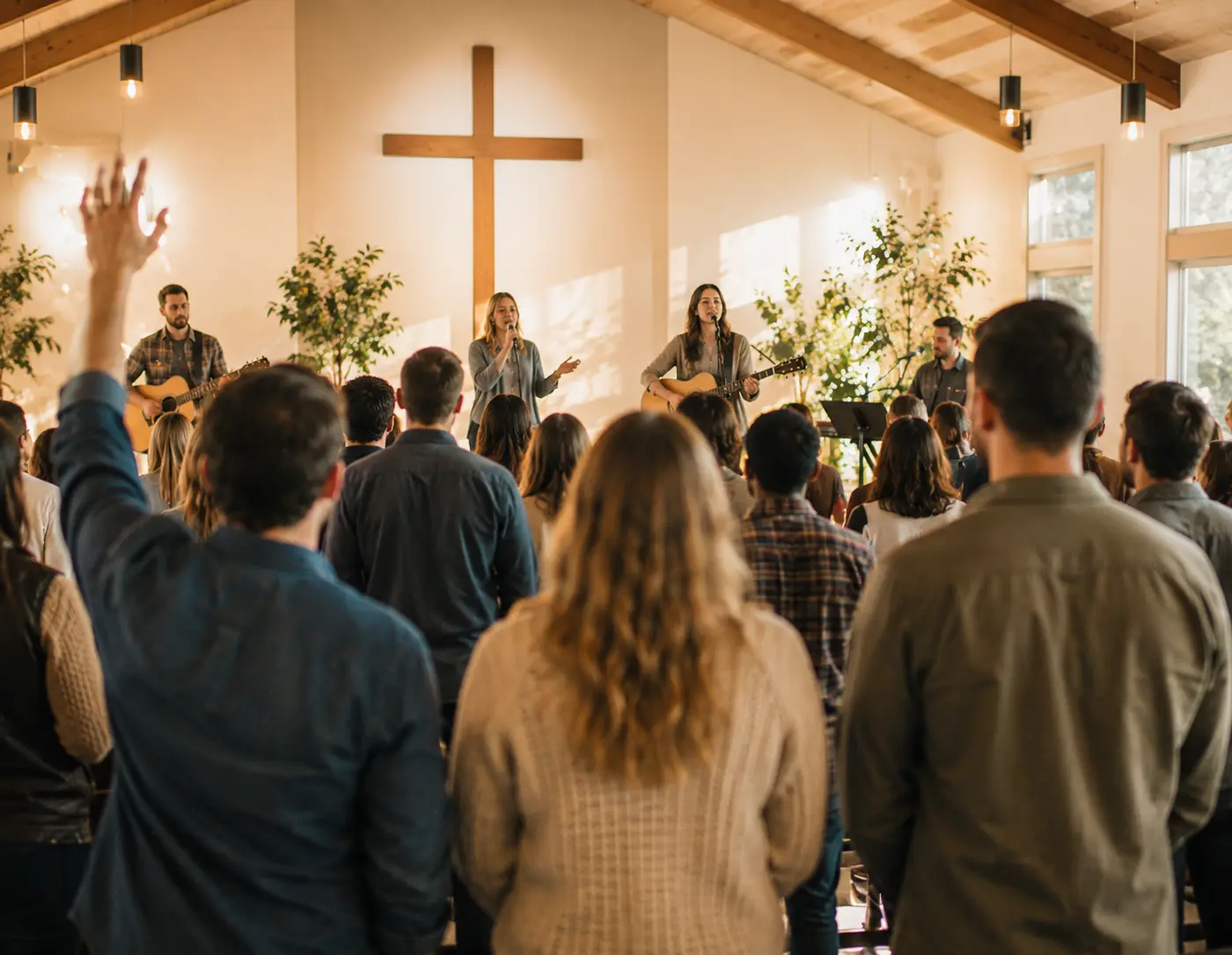
The whole genre turns on one word: You
Most songs describe someone. Worship songs speak to someone. That grammatical difference is the entire craft distinction, and it is the thing generic lyric tools miss when they hand back three verses about faith in the third person. The drafts here are written as address. Not 'He is faithful' as a report, but words aimed at the one being sung to. The output comes back tagged [Verse] and [Chorus] as editable text, so if a line slips into describing rather than addressing, you can catch it and turn it around.

Why write worship lyrics here
A worship lyrics generator that knows the genre is written in second person and that a church has more seasons than one.
The You is the point
Direct address is built into how the drafts come back, so you spend your edit on the words rather than converting third-person description into something singable to God.
Your passage, not generic praise
Name the scripture and its images do the work. The difference between a song from Psalm 46 and a song about God being strong is most of the reason to write a new one at all.
Room for the hard seasons
Lament, waiting, and exhaustion are available postures. Churches go through those years, and a tool that only writes celebration is not much use during them.
Honest about what it can get wrong
The page tells you to verify scripture rather than implying the output is authoritative. For anything a room will sing as truth, that seemed worth saying out loud.
Finished before Thursday
Four short fields and a read-through. Text edits cost nothing, so a wordy chorus gets fixed at rehearsal without regenerating anything.
Full Toolkit
From lyric sheet to Sunday
The words come first here. When they are settled, the rest of SunoPrompt handles the sound your team will actually work from.
AI Music Generator
Lyrics to Music mode sings the finished words, which makes a serviceable demo for a worship team that needs to hear the shape before rehearsing it.
Prompt Generator
Free tool for describing the arrangement: where the band drops out, where it builds, whether it sits closer to hymn or to modern worship. Useful when briefing musicians.
Vocal Remover & Stem Splitter
Splits a track into stems, up to eight with MIDI export. One practical use is pulling a clean instrumental for a rehearsal room or a quieter service.
Explore more
Who writes with this
Worship leaders planning a service
The sermon theme is set and nothing in the catalog quite answers it
You want a response song that points where the message pointed
Sunday arrives weekly whether or not the writing went well
How the Worship Lyrics Generator works
The Worship Lyrics Generator writes worship song lyrics in direct address, anchored to the passage or moment you name, and hands them back as editable text tagged by verse and chorus.
Addressed, not described
What separates a worship lyric from a song about faith? Person. A worship lyric is second person: it talks to God rather than reporting on God to a room. That one shift changes the vocabulary, the verbs, and the emotional distance. When you read your draft, check the pronouns first. If a verse has drifted into third-person description, it has quietly become a song about worship instead of an act of it.
Anchoring the song to a passage
Name the scripture in the details field and the lyrics work from its images rather than from generic praise vocabulary. Type 'Psalm 46, the river and the city that will not be moved' and the verses come back carrying that river. Worth stating plainly: an AI can paraphrase a passage loosely or blur two together. Read the text alongside the draft and correct anything it puts in quotation marks or presents as scripture.
What the posture field is doing
Worship is not one emotional register, and treating it that way is why so many songs sound alike. Awe, gratitude, repentance, lament, plain endurance: these are different songs with different words. Setting the posture to 'grieving but trusting' produces something a congregation in a hard season can mean. Setting it to 'unhurried gratitude' produces something else entirely from the same passage.
Can someone sing this on their worst week?
A useful test before you finalize. Congregations are never uniformly fine. Somewhere in the room is a person who buried someone this month, and the lyrics either make room for them or ask them to fake it. This is not an argument for making every song sad. It is a case for checking that the claims a song asks people to sing out loud are ones they could mean while grieving.
Getting it to the team
Because the draft stays text, the practical side is easy. Print it for rehearsal, paste it into slides, or hand it to whoever writes the chord chart so they can build around the words. The AI Music Generator can sing the finished lyrics if the band wants to hear a version before Thursday. Nothing has to be produced before the words are settled.
How it differs from other lyric tools
It writes in address, not description. The draft speaks to God in second person instead of narrating faith from a distance, which is the line most general lyric tools never notice.
The passage steers the writing. Give it Psalm 46 and you get that psalm's images, not interchangeable praise language that would fit any Sunday.
Lament is available. The posture field takes grief, waiting, and exhaustion as legitimate worship registers, so the tool is usable in the seasons churches actually have.
It tells you to check the scripture. Paraphrase drift is a real failure mode, and a tool that pretends otherwise is a worse tool for a church than one that says so.
It stays neutral on tradition. Hymn-shaped or modern, liturgical or free, the fields take your direction rather than assuming a house style.