AI ToolboxAI K-pop Generator

AI K-pop Generator

Subject or group concept
Occasion
K-pop concept and style
Visual mood and story
人声性别随机
消耗: 40 积分

Loading...

How to make K-pop with AI

01

Pick your concept

Type a K-pop concept into the style field: dark, cute, girl crush, retro, experimental. This single tag determines the production palette, energy level, and structural approach. Everything follows from the concept.

02

Describe the visual, not the music

In the long field, describe the music video you'd want. What does the set look like? What's the outfit energy? What happens in the chorus? K-pop is a visual genre, and visual descriptions give the AI better production cues than technical ones.

03

Generate and check the transitions

Hit Generate. Listen for the section shifts: does the pre-chorus build enough? Does the rap break land? Does the key change hit? If one section feels flat, regenerate with a more specific note: 'harder chorus drop' or 'more dramatic bridge.'

Section shifts

Genre switches mid-song, the way K-pop actually works

A Western pop song picks one groove and rides it. A K-pop song might open with an R&B verse, build into an EDM pre-chorus, drop into a trap-influenced chorus, shift to a rap verse over stripped drums, hit a ballad bridge with just piano and voice, then lift the final chorus a half-step with full production returning. The AI generates with this structural DNA. When you pick a K-pop concept, the output includes section transitions that shift texture, energy, and sometimes genre within the same track. The pre-chorus builds tension differently than the verse. The post-chorus drops to a chant or ad-lib section. The bridge breaks the pattern on purpose. This is the hardest thing to get right in K-pop production. Most AI tools produce songs that stay in one lane. This one changes lanes because the genre demands it.

Create K-pop Song
Concept brief

The concept drives everything, the form starts there

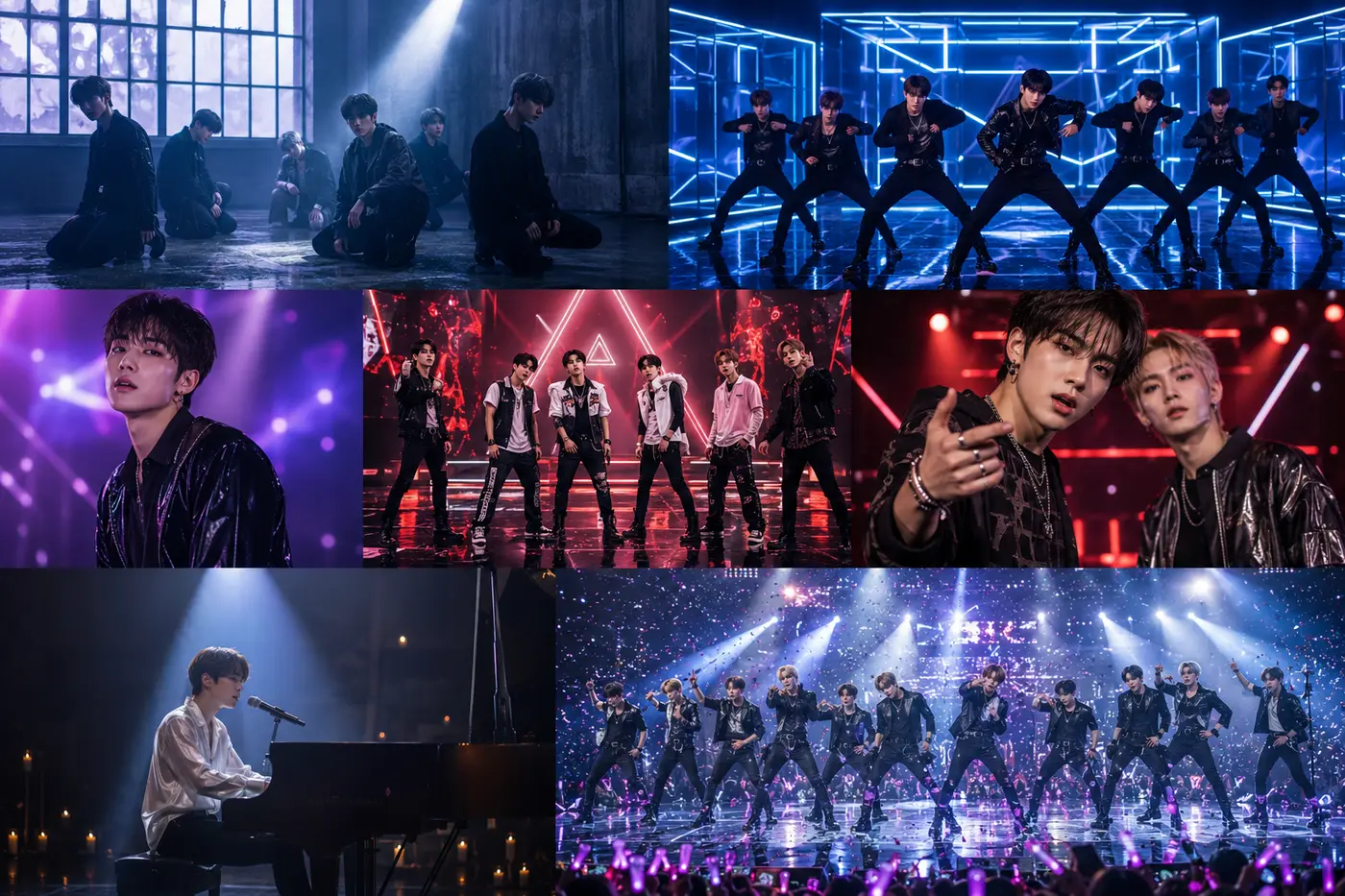
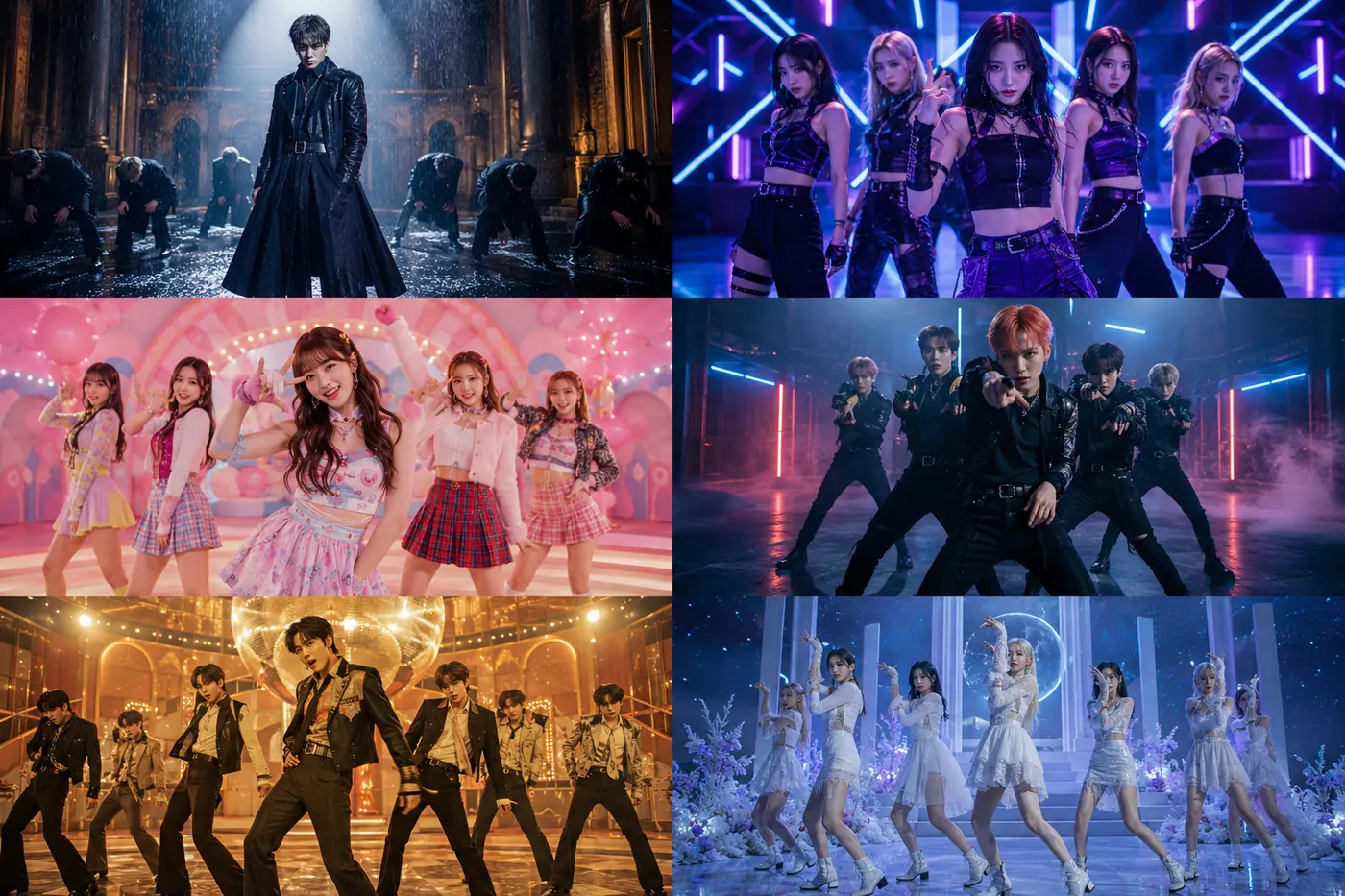
K-pop songs aren't built from a chord progression. They're built from a concept. 'Dark concept' means minor keys, heavy bass, aggressive choreography energy. 'Cute concept' means bright synths, bouncy rhythm, higher vocal register. 'Retro' means analog synth textures, disco influence, warm mixing. The concept is the creative director. The style field is where you name that concept. The short fields set context: who is this for, what's the occasion. But the style tag is the decision that shapes the entire production. The long field adds specificity. Instead of musical instructions, describe the visual. K-pop is designed for music videos, so a description like 'abandoned theater, solo spotlight, dramatic coat, rain falling on the stage' gives the AI a visual mood it can translate into production choices. Two people writing 'girl crush concept' with different visual descriptions will get two songs that share an attitude but sound nothing alike.

K-pop Song AI Generator

Why make K-pop with SunoPrompt

K-pop production normally involves a team of writers, producers, vocal directors, and choreographers working in sync. This collapses that pipeline into a concept and a text description.

Concept-driven, not genre-driven

You don't pick 'pop' and adjust settings. You pick a concept and the AI loads the full production philosophy behind it. Dark, cute, girl crush, retro, experimental. Each concept changes the synth palette, drum programming, vocal approach, and structural pacing in ways that a simple genre tag can't.

Mid-song genre switches built in

K-pop's defining production trait is that sections don't have to match. An R&B verse can lead into a house chorus. A trap rap break can sit between two melodic sections. The AI generates these transitions because K-pop structure demands them. You don't need to request it. It's the default.

Pre-chorus, post-chorus, and rap break as real sections

Most AI tools treat a song as verse-chorus-verse. K-pop has more sections, and each one has a distinct function. The pre-chorus builds. The post-chorus lands a chant hook. The rap break shifts the energy. The AI generates all of these with appropriate production weight, not as filler between choruses.

Layered production that rewards repeat listens

K-pop tracks are dense on purpose. Background vocal chops, synth textures that only appear for two bars, percussion fills that change every four beats. The AI generates with this layered approach so the output has depth. First listen gives you the song. Third listen gives you the details.

Visual descriptions as valid input

K-pop production starts from visual concepts, not musical briefs. The form accepts this. Describe an outfit, a set, a lighting scheme, a choreography moment. The AI translates visual energy into production choices because that's how the genre actually works. 'Neon highway at 3 AM' is better input than '128 BPM dance pop.'

Full toolkit

K-pop production, full creative suite

The AI K-pop Generator handles the track. SunoPrompt's other tools cover lyric writing, cross-genre production, and stem separation. One account connects everything.

AI Music Generator

When you want to produce outside the K-pop space. B-sides, OST ballads, or tracks in Western pop, R&B, or EDM. Same form, different style tag. Useful if your project mixes K-pop tracks with other genres in one release.

Lyrics Generator

K-pop lyrics often balance English hooks with Korean verses. The Lyrics Generator writes from a mood or concept brief. Feed it 'girl crush concept, confident, rooftop night vibes' and the output matches the attitude. Edit the lyrics into your generated track's mood field for tighter alignment.

Vocal Remover & Stem Splitter

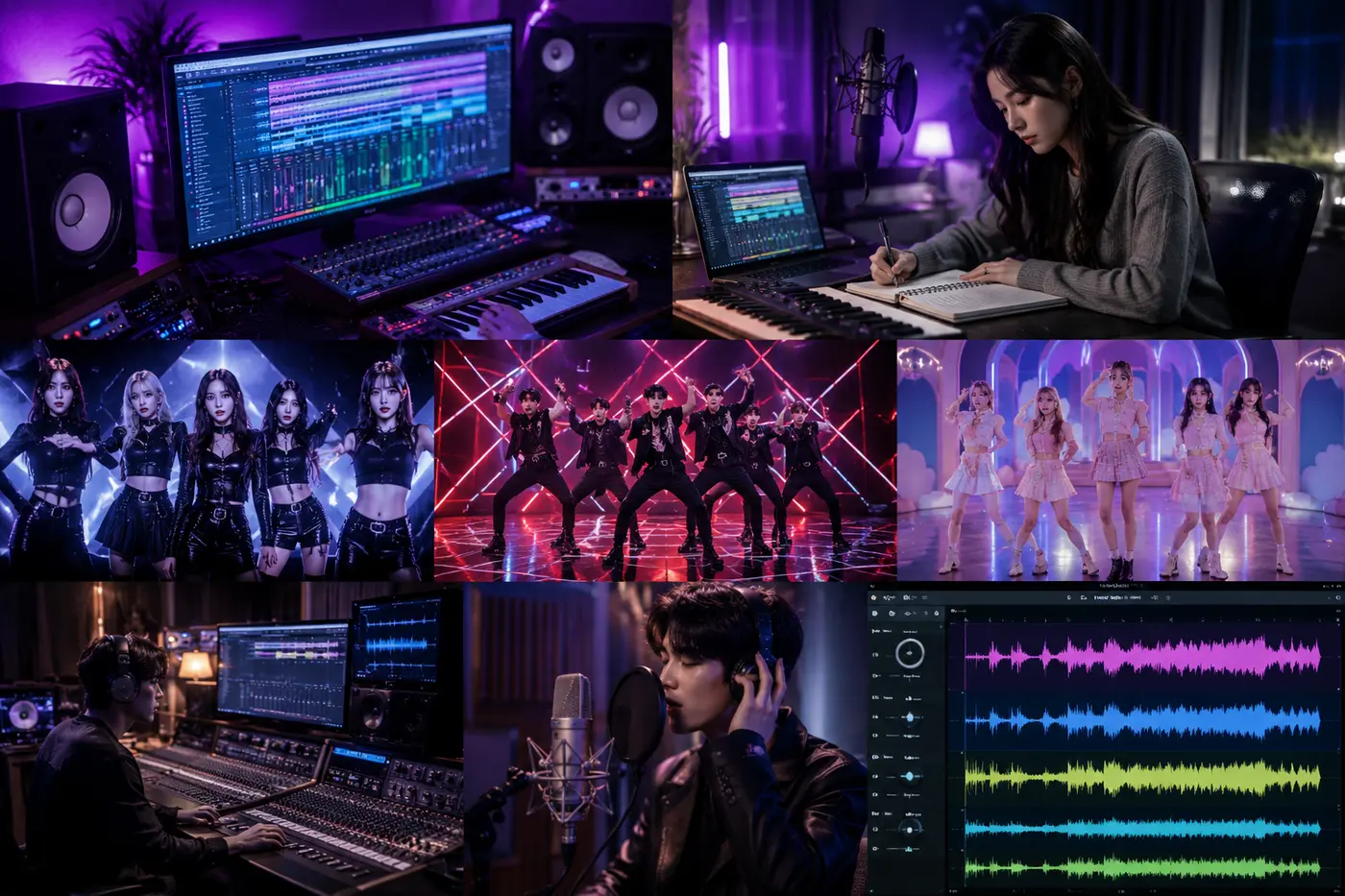
Isolate the vocal from a generated K-pop track to use as a dance practice backing. Or pull the beat out to study the production layers. K-pop tracks are dense, so hearing individual stems helps you understand how the sections are built.

K-pop Song Generator

Explore more AI music tools

Who creates K-pop with this

K-pop fans and creators

Generate tracks that match the concept and energy of your favorite groups without needing a Korean production studio

Create original songs for fan projects, dance covers, or content that needs a K-pop-style backing track

Explore how different concepts change the same mood: take one visual description and generate it as dark concept, then as retro, then as cute

What is an AI K-pop generator?

An AI K-pop Generator produces complete Korean pop-style tracks from a concept description. You name a concept and describe the visual mood, and the AI builds a song with K-pop's signature multi-section structure, genre switches, vocal layering, and production density. No production team, no studio session, no industry connections.

What makes K-pop structurally different from Western pop

Western pop songs usually commit to one genre and one energy level. The verse is quieter, the chorus is louder, but they share the same instrumental palette. K-pop breaks that rule on purpose. A single track might move through R&B, EDM, hip hop, and ballad textures in three minutes. The pre-chorus exists specifically to build tension before the chorus hits. There's often a rap section that shifts the groove entirely. The bridge might strip everything away before a key change lifts the final chorus. This structural complexity is what K-pop fans expect, and what the AI generates when you choose a K-pop style.

Concepts are not genres, they are creative directions

A K-pop concept is a complete aesthetic package. 'Dark concept' doesn't mean 'add minor key.' It means heavy bass, aggressive synth textures, vocals with edge, and production that leans into tension over resolution. 'Cute concept' doesn't mean 'add bells.' It means higher vocal placement, bright synth pads, bouncy percussion, and a melody that sticks after one chorus. 'Girl crush' means confidence in the vocal delivery, harder beats, and a chorus that punches. Write your concept in the style field. The AI loads the associated production toolkit for that concept, not a single instrument swap.

The story field as a music video pitch

K-pop songs are released with music videos. The visual and the audio are developed together. This means describing a visual scene is a legitimate way to brief a K-pop production. Write 'mirror room, sharp choreography, black and white with one color accent, the mood cracks open in the bridge to something raw and unguarded' and the AI translates those visual cues into production choices. The mirror room suggests precision and repetition in the beat. The color accent suggests a moment of contrast. The cracked mood in the bridge suggests a stripped arrangement and vulnerable vocal. This kind of input works better for K-pop than writing 'fast, catchy, dance music.'

Vocals in K-pop: multiple roles in one song

A K-pop track typically features different vocal approaches in different sections. The verse might have a softer, lower delivery. The pre-chorus pushes the vocal higher and adds urgency. The chorus is full-voiced and layered. A rap section shifts to rhythmic speech. The bridge might isolate a single voice for an emotional high note. The AI generates these shifts within one track. The Voice Gender selector picks the primary vocal tone, but the AI adds variation across sections. For a boy-group feel with a deeper lead, pick Male. For a girl-group feel with a brighter vocal, pick Female. Both options produce multi-textured vocal performances.

Why K-pop production is maximal by design

Some genres strip down to the essentials. K-pop does the opposite. It layers. Synth pads, vocal chops, percussion fills, sound effects, ad-libs between phrases, chant hooks after the chorus. This density is intentional. K-pop tracks are designed for repeated listening, and each listen reveals a detail you missed before. The AI generates with this layered approach. The chorus has more elements than the verse. The post-chorus has different elements than the chorus. Background textures shift every 8 bars. If you want a sparser production, specify it: 'minimal K-pop, less layering.' Otherwise the AI defaults to the genre's signature density.

How this differs from a standard AI music generator

Standard AI tools produce songs where every section shares the same instrumental palette. K-pop requires different production textures in different sections: an R&B verse can lead into an EDM chorus. The AI handles these mid-song genre switches as a core feature of K-pop generation.

Most generators build songs with one vocal approach throughout. K-pop tracks need vocal variety within a single song: soft verses, belted choruses, rap breaks, whispered bridges. The AI shifts vocal delivery across sections rather than maintaining one consistent style.

A generic tool doesn't understand the concept system. Writing 'dark' in a standard generator adds minor key. Writing 'dark concept' here loads an entire production philosophy: bass weight, synth texture, vocal edge, arrangement density, and structural aggression. The concept tag controls dozens of production variables at once.

Other generators skip the pre-chorus or treat it as a short intro to the chorus. In K-pop, the pre-chorus is its own section with its own build, tempo shift, and energy arc. The AI generates pre-choruses with the structural weight K-pop gives them.

Frequently asked questions about AI K-pop music