مولد أغاني التخرج بالذكاء الاصطناعي
Loading...
كيفية صنع أغنية تخرج بالذكاء الاصطناعي
سمِّ الخريج وحدد المزاج
أدخل اسم الخريج ووصفًا موجزًا لنوع التخرج. ثم اكتب المزاج. "فخور وقليل الحزن" و "حماسي، لقد نجونا" ينتجان مقطعين مختلفين جدًا.
اكتب القصة المهمة
ضع ذكرى حقيقية في الحقل الطويل. ليلة متأخرة في المكتبة. رحلة برية بين الفصول الدراسية. الفصل الذي غيّر اتجاهك. جملة أو جملتان تعطيان الذكاء الاصطناعي ما يكفي. المزيد من التفاصيل يعني كلمات أكثر تحديدًا.
أنشئ وقرر
مقطع كامل في أقل من دقيقة. استمع. إذا كنت تريد زاوية مختلفة، قم بتغيير القصة أو المزاج وأنشئ مرة أخرى. كل إصدار يتم حفظه في سجلك.
تحتاج حفلة تخرج إلى أغنية تعرف الغرفة.
الحفل لديه قائمة التشغيل الخاصة به بالفعل. الحفلة بعد ذلك هي المكان الذي تصل فيه أغنية تخرج مخصصة. تُعزف، يسمع شخص ما اسم الخريج، وتصبح الغرفة صاخبة. تغيير جنس الصوت يغير الشعور. صوت أنثوي لمقطع تأملي، صوت ذكوري لشيء أكثر حيوية، أو عشوائي لمعرفة ما يختاره الذكاء الاصطناعي. نسخة الحفلة ونسخة الاستماع الخاصة يمكن أن تكونا أغنيتين مختلفتين من نفس القصة. كلاهما يتم حفظه في السجل.
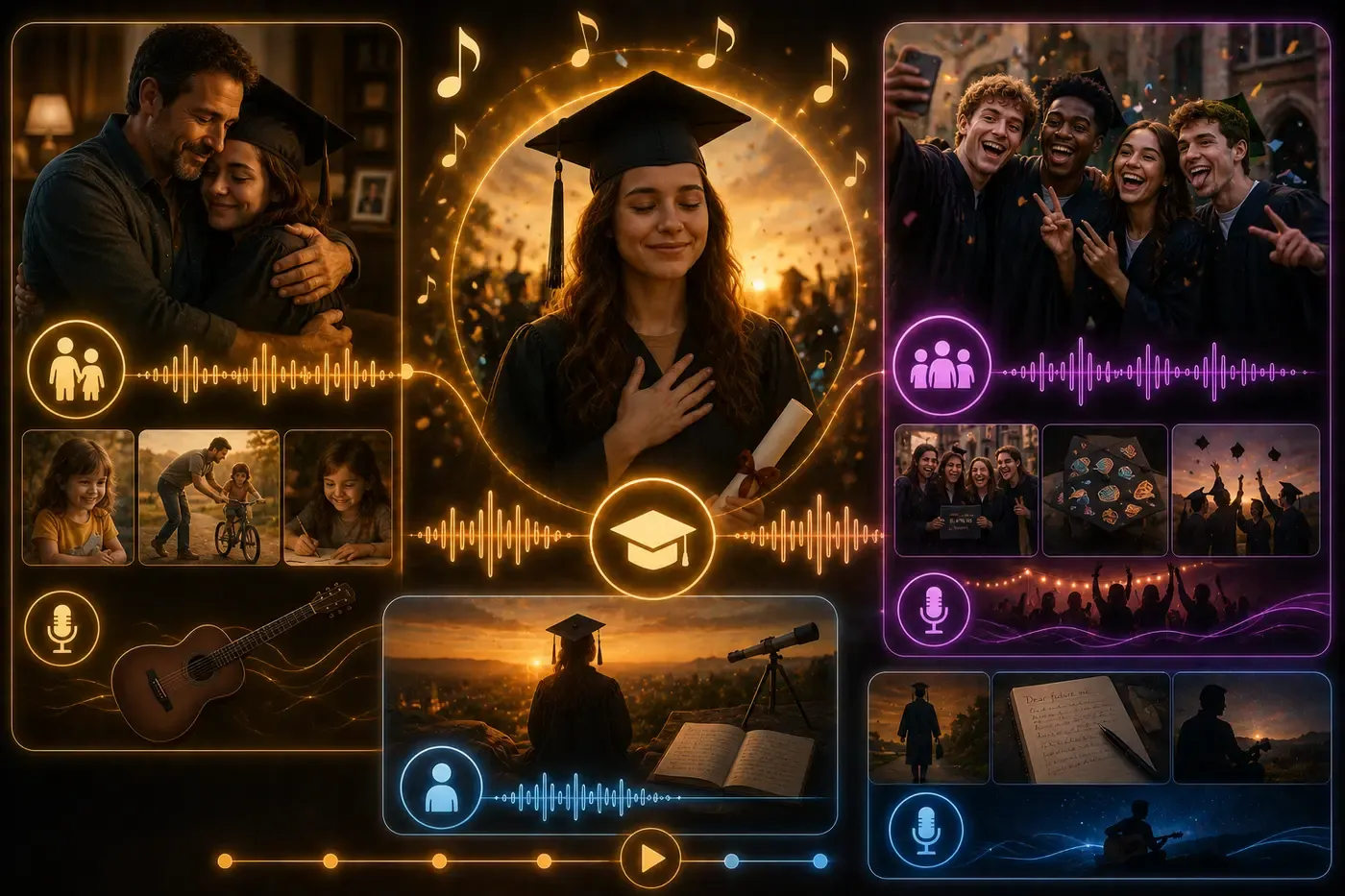
أربع سنوات مضغوطة في ثلاث دقائق. التفاصيل هي ما يجعلها تعلق.
تتداخل حفلات التخرج. القبعات، الخطابات، نفس "مسيرة الشرف" التي سمعها الجميع. ما تتذكره بالفعل أصغر. الأستاذ الذي بقي متأخرًا. الشقة ذات المدفأة المكسورة. الصديق الذي أوصلك إلى الامتحان الذي كدت تنام خلاله. حقل القصة هو المكان الذي تذهب إليه تلك التفاصيل. يقرأ مولد أغاني التخرج بالذكاء الاصطناعي ما تكتبه ويبني كلمات حول سنواتك المحددة، وليس نشيدًا عامًا "لقد فعلناها".
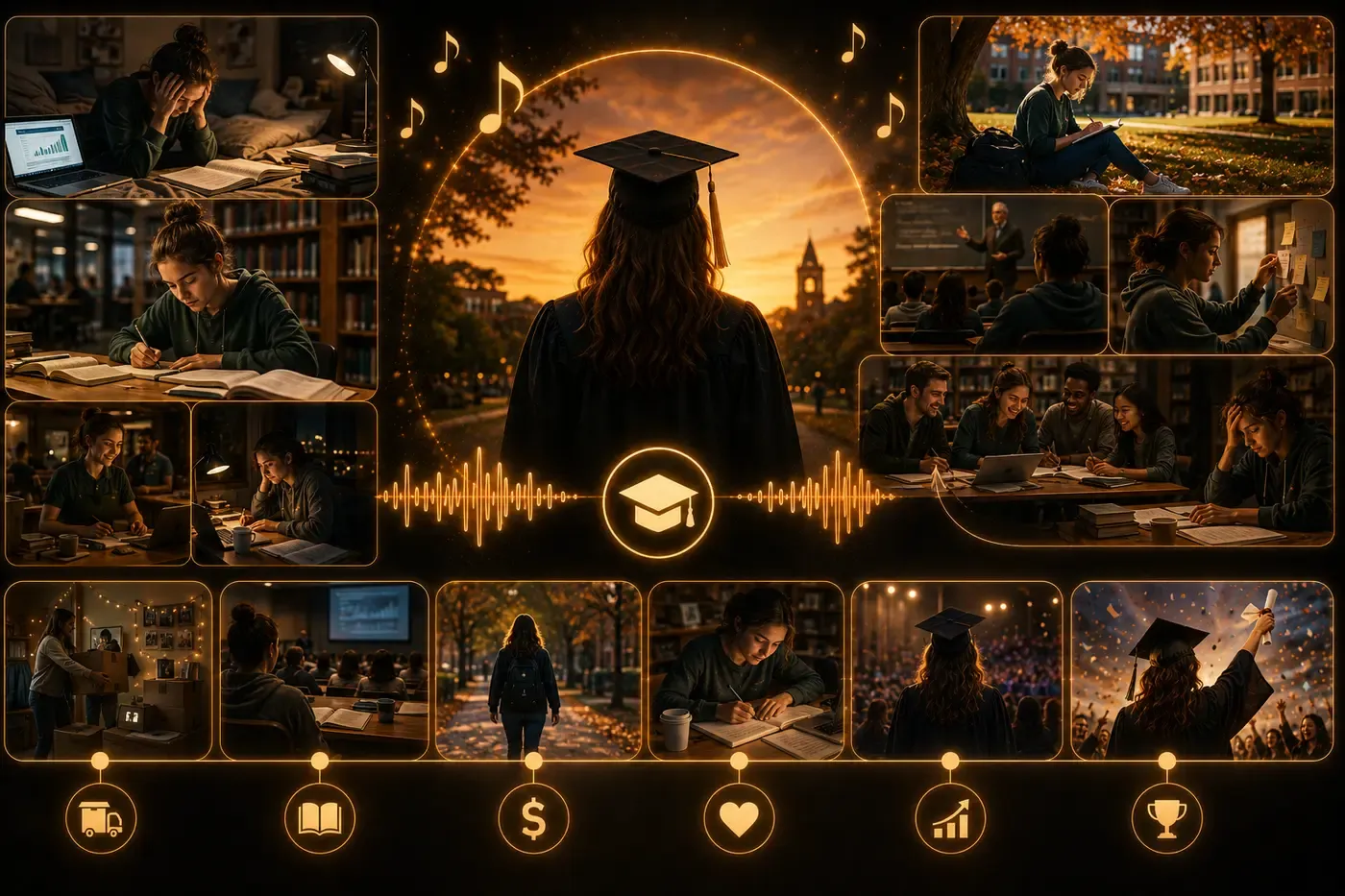
لماذا تستخدم مولد موسيقى التخرج SunoPrompt
يجب أن تبدو أغنية التخرج الشخصية وكأنها تعرف السنوات التي سبقتها. إليك ما يفعله مولد أغاني التخرج بالذكاء الاصطناعي هذا بالفعل.
ذكرىك تصبح الكلمات
حقل القصة ليس صندوق اقتراحات. يقرأ الذكاء الاصطناعي مدخلاتك ويكتب مقاطع حولها. المكتبة، القيادة المتأخرة، الفصل الذي كدت ترسب فيه. تلك التفاصيل هي الأغنية.
الاسم في اللحن
يظهر اسم الخريج في الكلمات، ويُغنى حيث يتناسب مع الإيقاع. في حفلة تضم 50 شخصًا، اللحظة التي يصل فيها الاسم إلى اللازمة هي عندما يتحول الغرفة.
المزاج يطابق الشعور الحقيقي
التخرج ليس شعورًا واحدًا. اكتب النسخة المعقدة. "مرتاح، ممتن، أفتقدها بالفعل" هو مزاج صادق ومدخل صالح. لا يحتاج الذكاء الاصطناعي إلى تبسيطه.
أي مدرسة، أي مستوى
رياض الأطفال حتى الدكتوراه. المدرسة المهنية، المعسكر التدريبي، شهادة الثانوية العامة. النموذج لا يقوم بالتصفية حسب المؤسسة. يسأل عما حدث وكيف شعر. هذا هو ما يدخل في الأغنية.
جاهز قبل بدء الحفل
أقل من دقيقة لكل إنشاء. قم بإنشائه في الليلة السابقة أو في الصباح. كرر حتى يصبح صحيحًا. كل إصدار يبقى في سجلك.
يعاد تشغيله أفضل من خطاب
لا أحد يعيد تشغيل خطاب تخرج. يتم تشغيل الأغنية في السيارة، في لم الشمل، في ذكرى اليوم. التفاصيل في الكلمات تعيد ذكريات السنوات المحددة في كل مرة.
مجموعة أدوات كاملة
أغاني التخرج هي أحد استخدامات محرك الموسيقى SunoPrompt
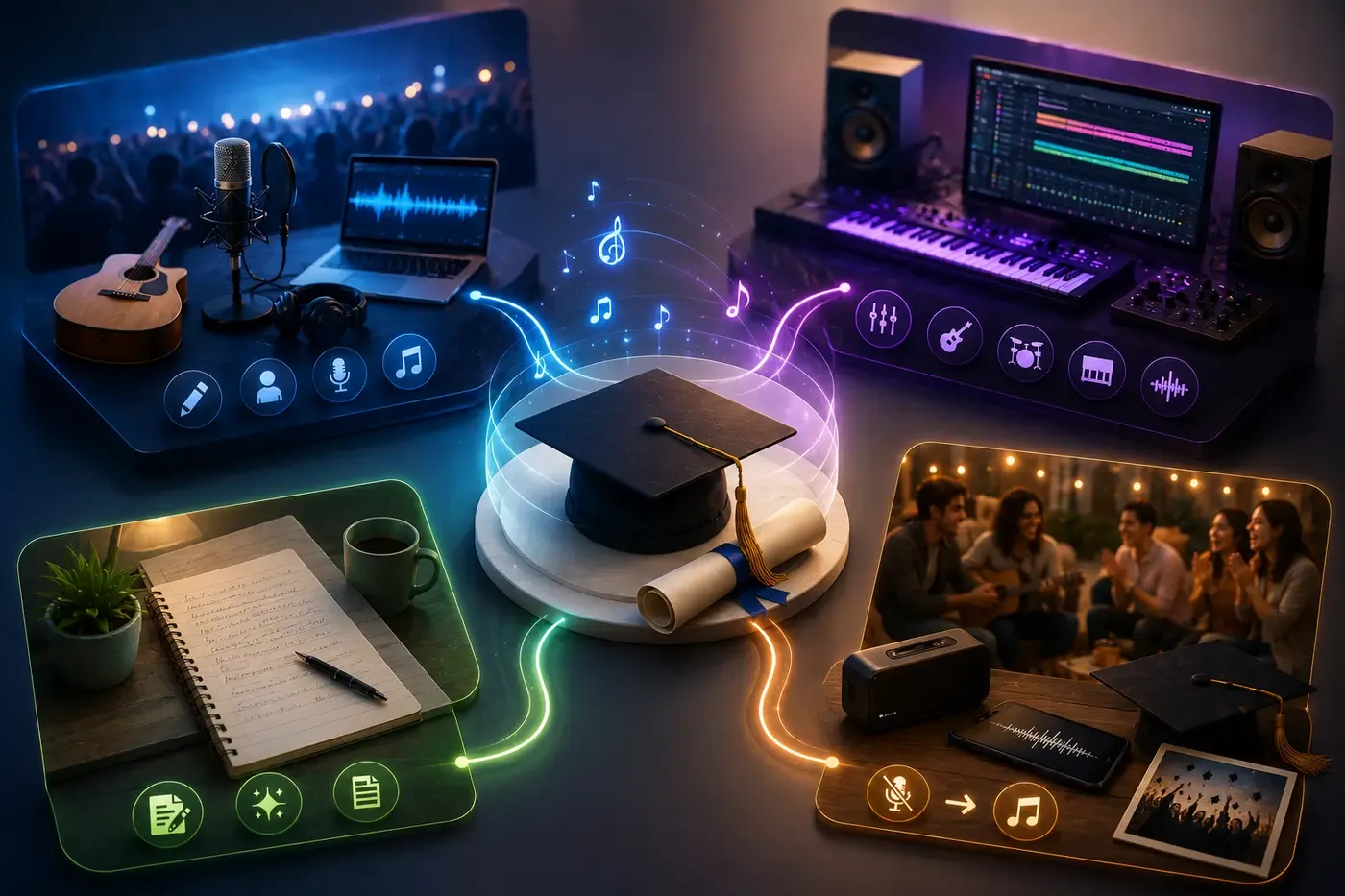
نفس الذكاء الاصطناعي الذي يكتب أغنية تخرج شخصية يدير مجموعة إنتاج موسيقي كاملة. أي نوع، كلمات مستقلة، وفصل صوتي. تركز أداة التخرج المحرك على معلم محدد.
مولد الموسيقى بالذكاء الاصطناعي
الإصدار غير المقيد للمحرك. قم بإنشاء مقاطع لأي مناسبة أو لا مناسبة. بعد أغنية التخرج، عد لإنشاء مقطع رحلة برية، أو مزيج رياضي، أو أغنية عيد ميلاد.
مولد الكلمات بالذكاء الاصطناعي
اكتب وحرر الكلمات كنص قبل إنتاج الأغنية. إذا كنت ترغب في مراجعة كلمات أغنية التخرج، أو تبديل سطر، أو إضافة مرجع، فابدأ بأداة الكلمات وأدخل النتيجة في مولد الموسيقى.
مزيل الصوت ومقسم الأجزاء
افصل الأصوات، الطبول، الباس، واللحن من التسجيلات الموجودة. إذا كانت هناك أغنية رافقت سنوات دراستك، فاعزل الآلات واستخدمها كمرجع مزاجي لمقطع التخرج الخاص بك.
استكشف المزيد من مولدات الأغاني بالذكاء الاصطناعي
من يستخدم مولد أغاني التخرج بالذكاء الاصطناعي
الخريجون يصنعون أغانيهم الخاصة
اكتب الذكريات التي تريد الاحتفاظ بها واسمعها مرة أخرى كأغنية يمكنك إعادة تشغيلها لسنوات
اصنع نسخة للحفلة ونسخة خاصة بالتفاصيل التي لن تشاركها على المسرح
أنشئها خلال أسبوع الامتحانات عندما يضرب الحنين. أقل من دقيقة وهي جاهزة.
ما هو مولد أغاني التخرج بالذكاء الاصطناعي؟
مولد أغاني التخرج بالذكاء الاصطناعي على SunoPrompt يحول اسم الخريج وذكرى مدرسية ومزاجًا إلى أغنية أصلية. أنت تكتب التفاصيل التي حددت تلك السنوات. الأداة تنتج كلمات ومقطعًا صوتيًا كاملاً مبنيًا على ما وصفته.
حقل القصة هو المكان الذي تعيش فيه السنوات
أغاني التخرج العامة تقول "لقد فعلناها" و "المستقبل مشرق". لقد سمعت تلك الأغاني. اكتب ما حدث بالفعل بدلاً من ذلك. "أمضيت ثلاثة فصول دراسية في التخصص الخاطئ قبل التحول إلى الشيء الذي كنت أهتم به حقًا" يعطي الذكاء الاصطناعي سردًا. "أصبحت غرفة نوم المكتبة في الساعة 2 صباحًا غرفة معيشتنا الثانية" يعطيها مكانًا. كلما كانت مدخلاتك أكثر تحديدًا، قلّ أن تبدو الأغنية مثل أي أغنية أخرى في قائمة تشغيل التخرج.
يتم غناء الاسم، وليس الإعلان عنه
اسم الخريج يتدفق إلى تكوين الكلمات. يكتبه الذكاء الاصطناعي في اللحن حيث يتناسب إيقاعيًا. في حفلة تخرج، هذه هي اللحظة. الأغنية تُعزف، يظهر الاسم في اللازمة، وفجأة يصبح واضحًا أن هذه الأغنية موجودة بسبب سنوات شخص معين في مكان معين.
المزاج يغطي نطاقًا أوسع مما تتوقع
ليس كل أغنية تخرج يجب أن تكون بالاد حزين. "مرهق ومرتاح" هو مزاج. "فخور ولكن بصراحة سعيد لأنه انتهى" هو مزاج. "احتفال، صاخب، لا ننظر إلى الوراء" هو مزاج. اكتب ما يشعر به الخريج فعليًا، أو ما تشعر به تجاه تخرجه. يقوم الذكاء الاصطناعي بضبط الأسلوب الموسيقي والإيقاع ونبرة الكلمات لتتناسب مع ذلك.
جنس الصوت ومن يبدو أن الأغنية منه
قد يختار أحد الوالدين الذي يصنع أغنية هدية تخرج صوتًا يبدو وكأنه يغني من منظوره. قد يختار صديق يصنعها للمجموعة "عشوائي" ويترك الأمر للذكاء الاصطناعي ليقرر. الصوت ليس زخرفة. إنه يشكل ما إذا كانت الأغنية تبدو بمثابة تكريم، أو احتفال، أو تأمل شخصي.
يعمل لأي مستوى مدرسي أو برنامج
المدرسة الثانوية، البكالوريوس، الماجستير، المدرسة المهنية، المعسكر التدريبي. النموذج لا يسأل عن نوع التخرج. يسأل عما حدث وكيف شعر. أغنية تخرج رياض الأطفال عن تعلم كتابة اسمك الخاص وأغنية تخرج كلية الحقوق عن النجاة من التحضير لاختبار النقابة كلاهما على بعد جيل واحد.
كيف تقارن أداة صنع أغاني التخرج هذه بأدوات الموسيقى العامة بالذكاء الاصطناعي
قائمة تشغيل تخرج Spotify تجمع أغاني الآخرين عن النمو. أغنية تخرج مخصصة تذكر الخريج بالاسم وتشير إلى سنواته الفعلية. أحدهما موسيقى خلفية. الآخر وثيقة لتجربة معينة.
تبدأ أدوات الموسيقى العامة بالذكاء الاصطناعي بموجه فارغ وتحتاج منك تحديد النوع والبنية والكلمات والأداء. يبدأ مولد موسيقى التخرج هذا بما يهم: من تخرج، وماذا حدث، وكيف شعر. الأداة تتولى الباقي.
معظم مولدات الأغاني بالذكاء الاصطناعي لا تتكيف مع النطاق العاطفي للتخرج. إنه ليس شعورًا واحدًا. إنه مزيج من الفخر والارتياح والخسارة والإثارة والإرهاق. حقل المزاج يقبل هذا التعقيد. اكتبه بشكل فوضوي. الذكاء الاصطناعي يصنفه في أغنية.
يتم نسيان خطاب التخرج بحلول الوقت الذي يصل فيه الناس إلى سياراتهم. الأغنية يتم إعادة تشغيلها. يعيد الخريج تشغيلها في سن 25، وفي سن 30، والتفاصيل في الكلمات تعيد ذكريات السنوات المحددة، وليس ذكرى غامضة لليوم.