AI Workout Music Generator
Loading...
How to make workout music with AI
Name the exercise and phase
What are you doing? Running, lifting, HIIT, cycling, boxing? What phase? Warm-up, peak set, cool-down? Fill those into the short fields. The exercise type determines the energy profile the AI builds.
Set the style and BPM
Pick a genre and tempo. '170 BPM drum and bass' for running. '90 BPM trap, heavy' for deadlifts. 'EDM, 128 BPM, festival energy' for cycling. The BPM locks the track to your movement pace.
Generate and test it in motion
Hit Generate. The real test is during the workout. Does the tempo match your cadence? Does the energy carry you through the set? If not, adjust the BPM or push the mood field harder. Save tracks that work to history.
Tracks that follow your workout structure, not song structure
Normal songs build to a chorus, drop to a verse, build again. Workout music can't afford those valleys. The AI generates with a flattened or customized energy curve depending on what you need. For steady-state cardio, the energy holds one level for the full track. No breakdown, no quiet bridge. For HIIT, the AI alternates between high-intensity sections and brief recovery dips on whatever interval you specify. For lifting, the track front-loads aggression and keeps it there. The arrangement serves your rep count, not a verse-chorus template.
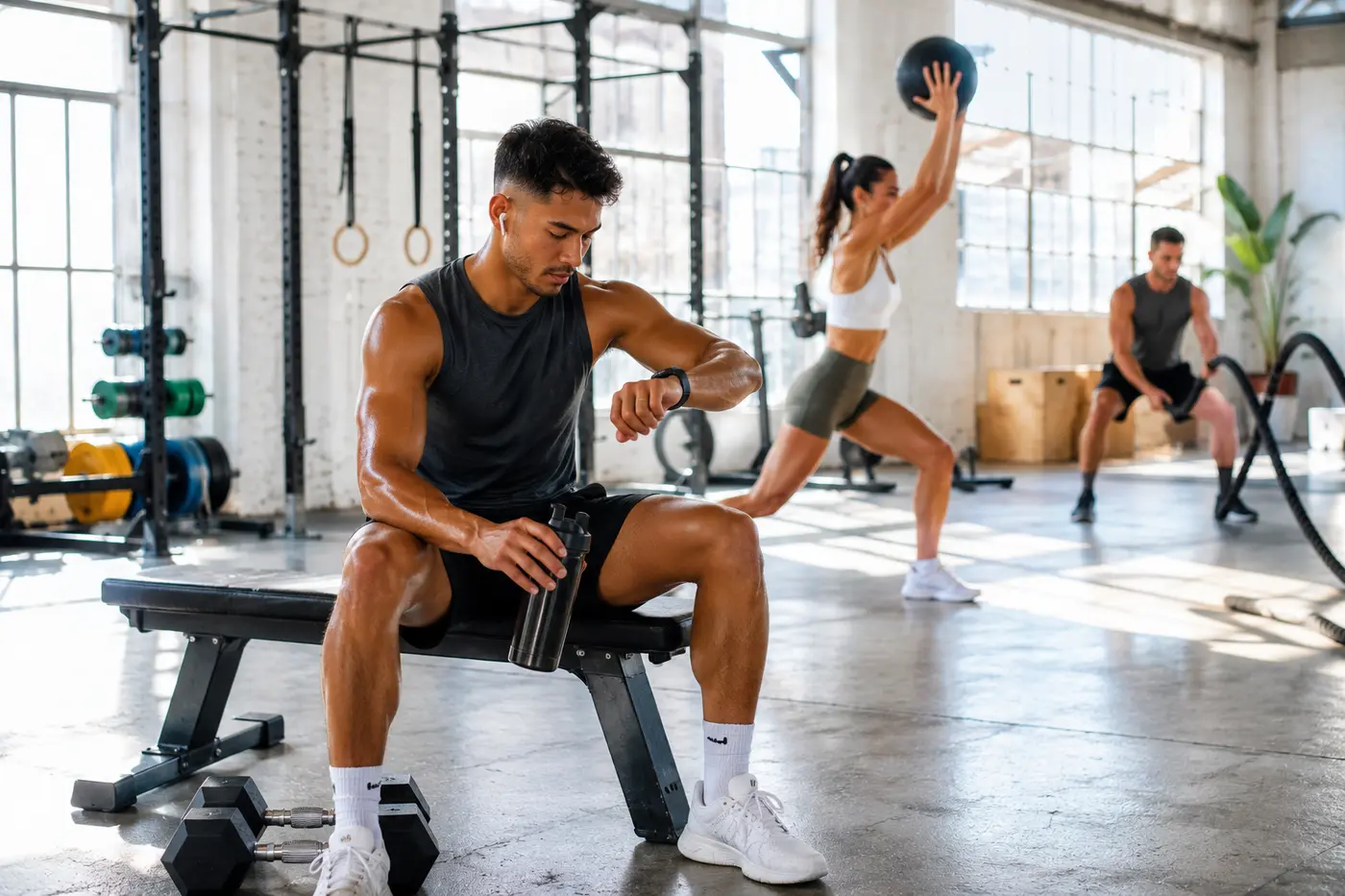
Tell the AI what you're doing, it builds the soundtrack
This isn't a music form. It's a training brief. The short fields ask what exercise you're doing, what phase of the workout, and what genre at what tempo. The long field describes the energy. Write 'last set of squats, legs are gone, I need something that makes me angry enough to finish.' The AI doesn't produce a pleasant gym-background track. It produces something aggressive, dense, and relentless. Write 'morning run, steady pace, 45 minutes, zone 2 heart rate' and the output levels out at a sustainable energy that doesn't spike or drop. The exercise determines the music. Not the other way around.
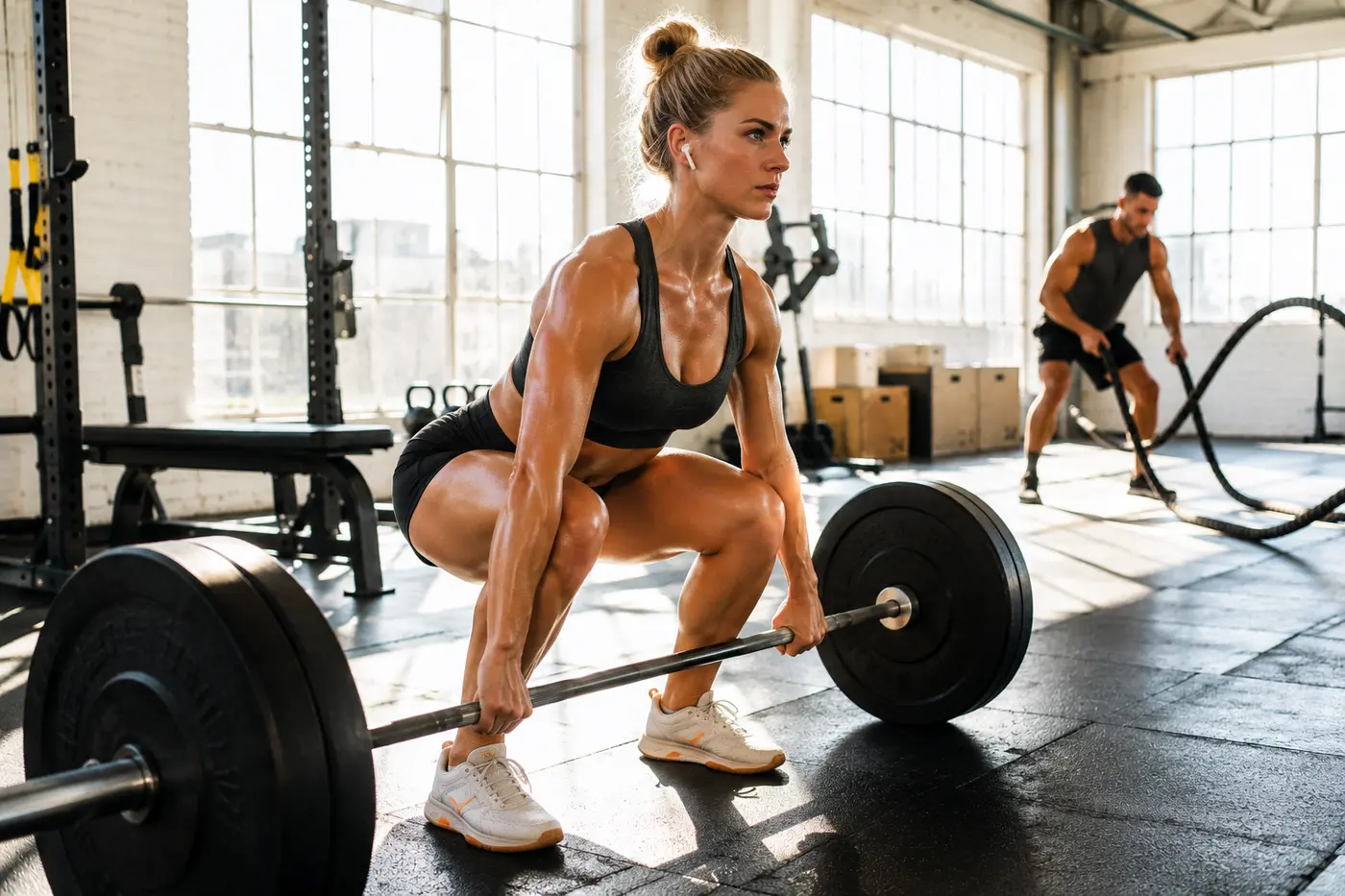
Why make workout music with SunoPrompt
Generic playlists play what an algorithm thinks you want. This plays what your workout actually needs.
BPM as the primary input
You set the tempo, the AI builds everything around it. 170 for running, 128 for cycling, 90 for lifting. The track becomes a pacing tool locked to your movement speed. No more manually filtering songs by BPM.
Exercise-aware arrangement
Running tracks get forward momentum. Lifting tracks get low-end weight. HIIT tracks get interval-matched energy shifts. The AI reads your exercise type and adjusts what frequencies dominate, how dense the arrangement is, and where the energy sits.
No mid-workout energy drops
The AI generates with sustained intensity by default. No quiet bridge at minute two. No ballad section. No dynamic drop that breaks your concentration on rep 7. The energy curve serves the workout, not a song template.
Training phases as song structure
Write 'warm-up to peak over 4 minutes' and the track ramps. Write 'HIIT: 30 on, 15 off, 6 rounds' and the track builds audible shifts at those intervals. The AI structures the music around your training protocol instead of verse-chorus convention.
A library built around your routine
Generate tracks for each part of your workout. Save them to history. Next week, swap in a new track for the exercise that felt stale. Over time you build a personal library organized by exercise, phase, and intensity rather than by artist or album.
Full toolkit
Workout tracks are one set in a bigger routine
The AI Workout Music Generator covers training-specific tracks. SunoPrompt's other tools handle lyrics, genres outside the fitness context, and stem separation for remixing your workout tracks.
AI Music Generator
For the rest of your day. The workout track gets you through the session. The main generator creates whatever you want to listen to afterward: chill beats for the drive home, a jazz track for cooking, a pop song for the mood shift.
Lyrics Generator
Some workout tracks hit harder with words. Feed the Lyrics Generator your training context: 'aggressive motivational lyrics for a heavy lifting session, no cliches, just raw intensity.' The output matches the energy. Use the lyrics in your next workout track generation for tighter alignment.
Vocal Remover & Stem Splitter
Strip the vocal from a workout track to get a pure instrumental for training. Isolate the drum track to check if the BPM locks to your cadence. Pull the bass to test whether the low-end weight matches the exercise intensity you need.

Explore more AI music tools
Who generates workout music with this
Gym-goers and home trainers
Generate a playlist of 5-6 tracks matched to your exact workout split: warm-up, compound lifts, accessory work, cool-down
Set the BPM to your running cadence and get tracks that pace you without checking your watch
Replace the generic gym playlist with tracks built for how you specifically train
What is an AI workout music generator?
An AI Workout Music Generator creates exercise-specific tracks from a description of your training and target intensity. You name the exercise, set a BPM, choose a genre, and the AI produces a high-energy track designed to match your movement pace and sustain your effort. No playlist digging, no tempo mismatches, no mid-workout ballad surprises.
Why BPM matters more here than in any other genre
Research on exercise and music consistently shows that tempo affects performance. Runners naturally sync their cadence to the beat. Cyclists pedal to the rhythm. Even lifters time their reps to the pulse. A track at the wrong BPM fights your body instead of supporting it. 170 BPM matches a fast running cadence. 128 BPM matches a moderate cycling pace. 85-95 BPM matches controlled lifting tempo. The style field lets you set the exact number. The AI locks everything, drums, bass, melody, to that BPM so the track becomes a pacing tool, not background noise.
Exercise type shapes the arrangement
A running track and a lifting track at the same BPM still sound different. Running needs forward momentum: a relentless kick drum, driving hi-hats, a bassline that pulls you ahead. Lifting needs weight: heavier bass, sparser drums, aggression concentrated in the low end. HIIT needs contrast: explosive peaks followed by brief dips. Boxing needs a rhythm that matches punch combinations. Write the exercise in the context field and the AI adjusts the arrangement density, frequency emphasis, and energy patterning. Two tracks at 140 BPM, one for sprints and one for a heavy bag, won't sound alike.
The mood field as a coach's voice
Write what you need to hear. Not literally, but emotionally. 'I'm on rep 8 of 10 and my grip is failing, give me something that makes quitting feel unacceptable.' That produces a track with dense, aggressive energy in the low and mid frequencies, vocals that push hard, and zero arrangement breathing room. Write 'easy 5K, recovery day, stay loose and enjoy the route' and the track opens up, the tempo stays steady but the arrangement relaxes, and the mood stays encouraging without being intense. The mood field is the emotional calibration on top of the BPM and genre.
Workout phases as song structure
A normal song has verse, chorus, bridge. A workout has warm-up, main set, and cool-down. The AI can structure a track around training phases instead of musical convention. Write 'warm-up to peak: start at moderate energy and build to maximum over 3 minutes' and the track ramps. Write 'HIIT intervals: 40 seconds on, 20 seconds off, 8 rounds' and the AI builds audible energy shifts at those exact intervals so you don't need a timer. Write 'steady state, no changes, just hold the energy flat' and the track eliminates all structural variation. The exercise owns the structure.
How this differs from a generic AI music tool
Generic AI tools structure songs with verse-chorus dynamics that include quiet sections. Workout music can't have a quiet bridge at minute two when you're mid-sprint. The AI generates with sustained or training-specific energy curves instead of defaulting to musical convention.
Most generators ignore BPM as a primary input. For workout music, BPM is the most important variable. The AI locks the entire track to your specified tempo so drums, bass, and vocal flow all sync to your movement pace.
A standard tool doesn't understand exercise context. Running, lifting, and HIIT need different arrangement approaches at the same tempo. The AI adjusts frequency emphasis, density, and energy patterning based on the exercise type you describe.
Other generators produce tracks for listening. Workout tracks are functional: they're performance tools designed to sustain effort, match cadence, and override fatigue. The AI generates with this functional purpose rather than optimizing for musical interest.