AI-generator för lovsånger
Loading...
Hur man skapar lovsånger med AI
Namnge tillfället och stilen
Vart går den här sången? Inledning, mitt under gudstjänsten, nattvard, avslutning? Fyll i det i fältet för tillfälle. Välj sedan en stil: akustisk lovsång, samtida lovsång, modern psalm. Tillfället och stilen tillsammans ramar in sången.
Skriv temat eller budskapet
I det långa fältet, beskriv vad sången ska förmedla. Ett skriftställe, en bön, en specifik kamp som din församling går igenom. Ju mer jordnära temat är, desto mer kopplar texterna.
Generera och testa sjungbarheten
Klicka på Generera. Nynna på refrängen. Om du kan nynna den efter en lyssning, kan församlingen det också. Om det känns för komplicerat, generera igen med 'enklare melodi, mer repetition' tillagt i din beskrivning.
Melodier som ett rum fullt av icke-sångare kan följa
Lovsångsmusik misslyckas när melodin är för smart. Om församlingen inte kan följa med vid andra refrängen blir sången en performance. AI:n undviker detta. Melodier håller sig inom ungefär en oktav. Intervall mellan toner är små, mestadels steg snarare än språng. Refrängen upprepar en fras som är lätt att hålla i minnet efter att ha hört den en gång. Verser kan variera, men hook-raden kommer tillbaka oförändrad. Detta är avsiktlig design, inte en begränsning. Rytmen är också okomplicerad. Ingen synkopering som skulle lämna halva rummet ett steg bakom. Pulsen är tydlig, fraseringen följer naturliga talmönster och tempot ligger i ett omfång där folk kan sjunga utan att rusa eller släpa efter. AI:n balanserar musikalitet med tillgänglighet eftersom lovsånger behöver båda.
Berätta för AI:n var i gudstjänsten den här sången hör hemma
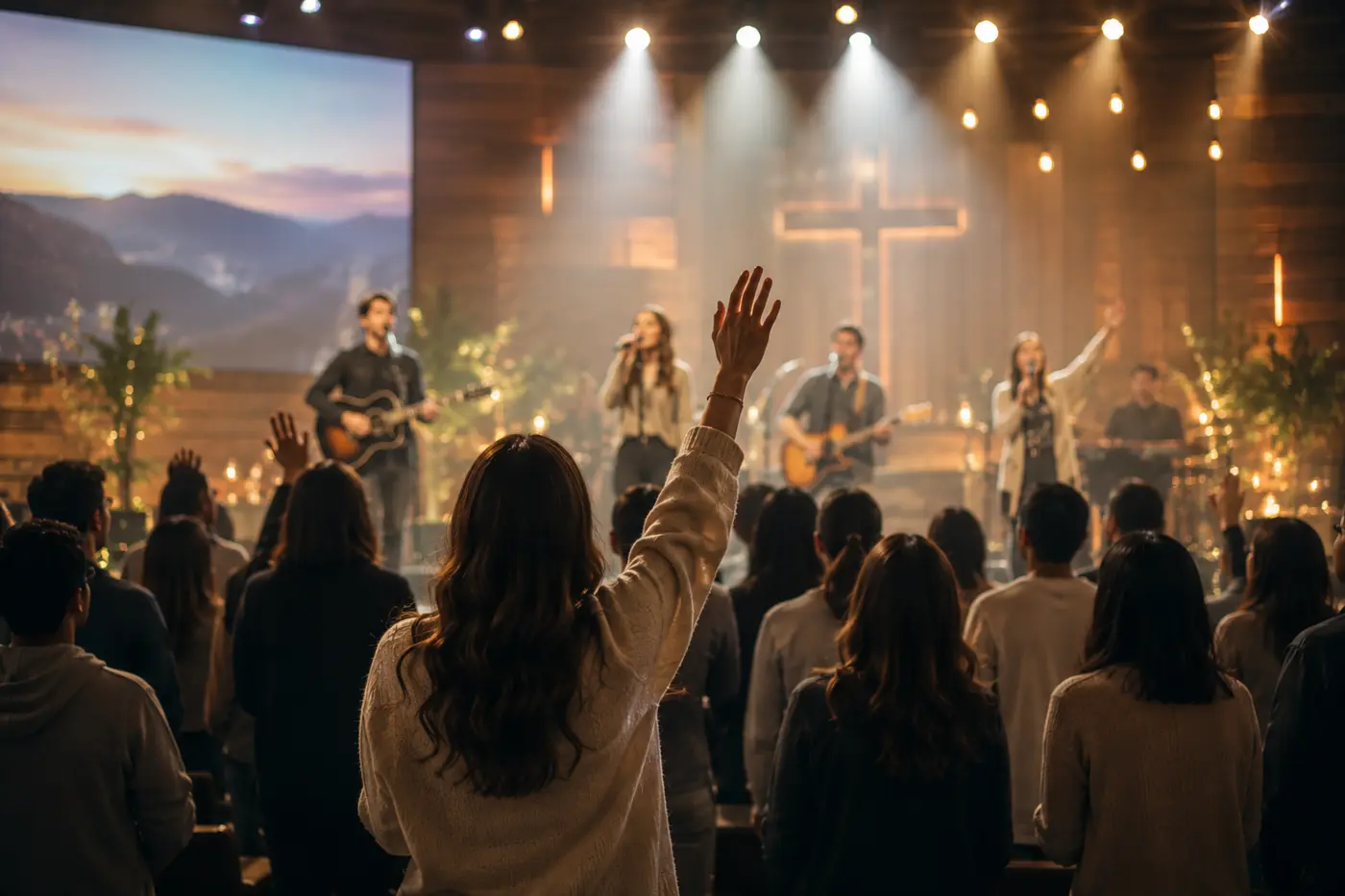
En lovsångsledare väljer inte sånger slumpmässigt. Öppningen sätter energin. Mellansången fördjupar fokus. Avslutningen lämnar rummet tyst och öppet. Formen fungerar kring denna verklighet. Tillfältsfältet frågar var i gudstjänsten den här sången hör hemma. Skriv 'öppningslovsång' och AI:n genererar något med driv, en inbjudan att ställa sig upp och sjunga. Skriv 'nattvardsreflektion' och resultatet sjunker till ett mummel, sparsam instrumentering, texter om närvaro snarare än handling. Skriv 'altaranrop' och sången byggs upp långsamt, med långa pauser där någon kan kliva fram. Stilfältet förfinar: 'akustisk, bara gitarr' kontra 'fullt band med keyboard och trummor' formar arrangemanget. Men tillfältsfältet formar hela sångens känslomässiga hållning. Det är det beslut som betyder mest.
Varför skapa lovsånger med SunoPrompt
Att skriva lovsångsmusik kräver vanligtvis en låtskrivare som förstår både den musikaliska traditionen och de specifika behoven hos en församling. Detta ger den förmågan i lovsångsledarens händer.
Byggd för församlingssång
AI:n standardinställs på melodier som håller sig inom ett sjungbart omfång, rytmer som följer talmönster och refränger som upprepas tillräckligt för att lära sig på en lyssning. Dessa begränsningar finns eftersom lovsånger misslyckas om folk inte kan delta. Resultatet är designat för deltagande.
Medvetenhet om gudstjänsttillfällen
En öppningslovsång behöver annan energi än en nattvardsreflektion. AI:n justerar tempo, textens hållning, arrangemangets densitet och känslomässiga båge baserat på var i gudstjänsten sången hör hemma. Du namnger tillfället, AI:n formar musiken runt det.
Texter formulerade som bön, inte performance
AI:n skriver lovsångstexter i första person plural med kadensen av kollektiv bön. 'Dra oss närmare' snarare än 'Jag vill vara närmare.' Denna gemensamma röst är en konvention som skiljer lovsång från annan vokalmusik, och AI:n följer den som standard.
Arrangemang som lämnar plats för rummet
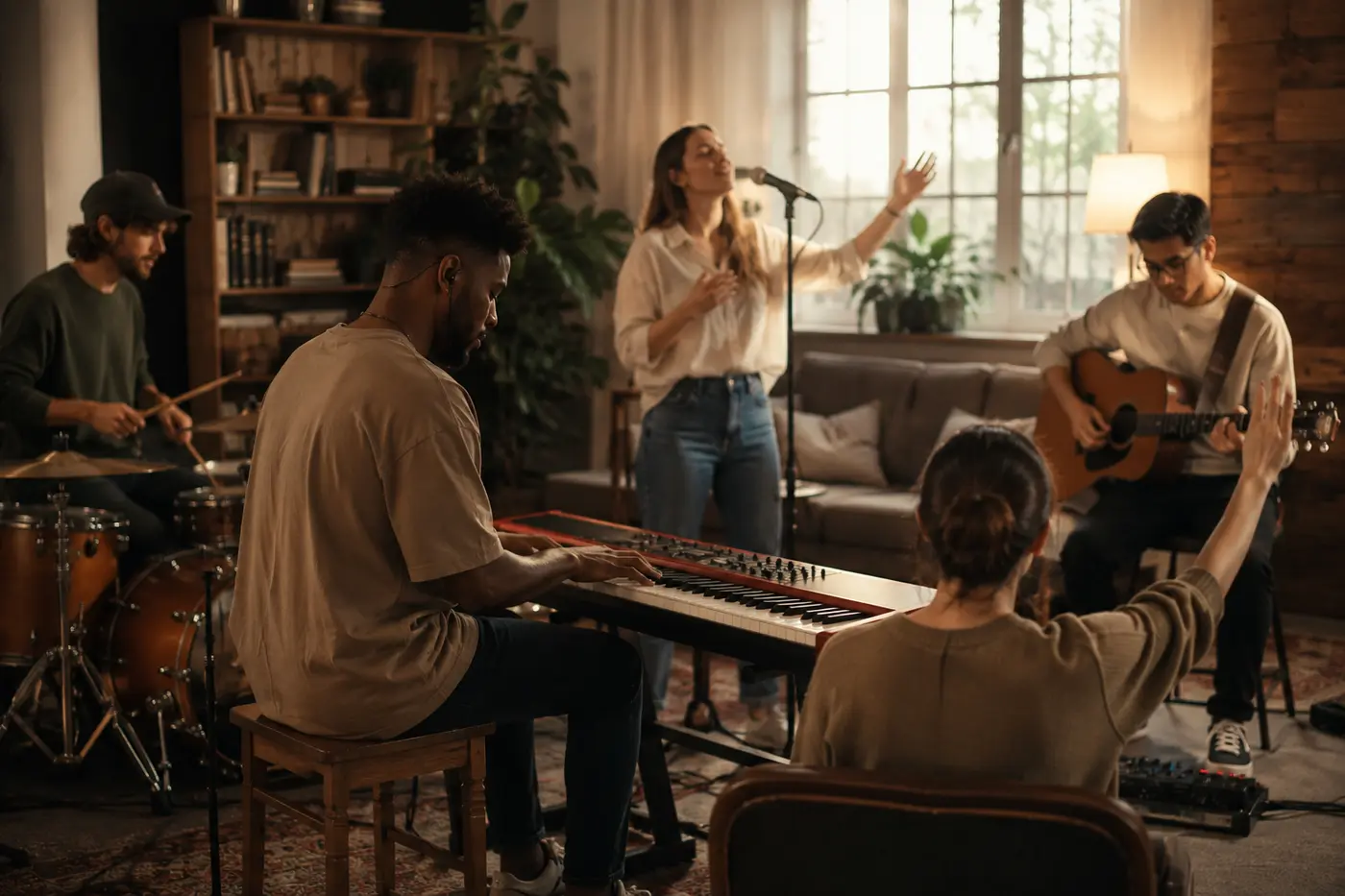
Ett lovsångsarrangemang som fyller varje frekvens lämnar inget utrymme för 200 röster som sjunger med. AI:n håller instrumenteringen stödjande: piano eller gitarr som bär harmonin, trummor som ger puls utan att överväldiga, pads som lägger till värme under. Mixen antar att det kommer att finnas andra röster som ansluter.
Originella sånger för ditt specifika budskap
Befintliga lovsångskataloger är stora, men att hitta en sång som matchar denna veckas specifika predikan eller din församlings specifika säsong tar tid. Att generera en sång från det faktiska temat, skriftstället eller bönen innebär att musiken och budskapet anländer tillsammans. Ingen sökning, ingen nöja sig med nästan bra.
Fullständig verktygslåda
Lovsånger ingår i en större verktygslåda för musik
AI-generatorn för lovsånger hanterar lovsångs- och tillbedjansspår. SunoPrompts andra verktyg täcker texter, fullproducerade sånger i alla genrer och ljudseparation. Samma konto, samma historik.
AI-musikgenerator
För sånger utanför lovsångskontexten. Om ditt kyrkevenemang behöver ett festligt popspår för mottagningen eller ett reflekterande ambientstycke för lobbyn, hanterar den huvudsakliga generatorn alla genrer du kan namnge.
Textgenerator
Skapa utkast till lovsångstexter från ett skriftställe eller predikotema. Användbart när du vet vad sången ska säga men behöver hjälp att hitta formuleringen. Ge den inputen 'lovsångstexter, församlingsmässiga, baserade på Romarbrevet 8' och orden kommer tillbaka redo att sjungas.
Vokalborttagning och spårseparering
Ta bort sången från ett genererat lovsångsspår för att skapa ett bakgrundsspår som ditt lovsångsteam kan sjunga över. Eller isolera pianostämman för att lära sig ackordföljden. Praktiskt för repetition och för att anpassa genererade sånger till ditt bands arrangemang.
Utforska fler AI-musikverktyg
Vem skapar lovsångsmusik med detta
Lovsångsledare
Generera originella sånger som matchar denna söndags predikotema istället för att söka igenom databaser med befintlig lovsångsmusik
Skapa sånger för specifika tillfällen under gudstjänsten: ett lugnt nattvardsstycke, en energisk öppning, en reflekterande avslutning
Testa nya sångidéer snabbt innan du tar dem till bandet för repetition
Vad är en AI-generator för lovsånger?
En AI-generator för lovsånger skapar originella lovsånger och tillbedjanssånger från en beskrivning av gudstjänsttillfället och temat. Du talar om för AI:n var i gudstjänsten sången hör hemma och vilket budskap den ska bära, och den producerar ett sjungbart spår med lovsångsinspirerad melodi, text och instrumentering. Ingen bakgrund inom låtskrivning krävs.
Lovsång, gospel, psalmer: tre traditioner, olika mål
Dessa genrer överlappar men är inte utbytbara. Psalmer är skrivna texter satta till etablerade melodier, ofta århundraden gamla, avsedda för unisont sjungande från en tryckt sida. Gospel är performance-drivet: en solist eller kör vittnar med känslomässig intensitet, musikalisk komplexitet och vokal virtuositet. Lovsång ligger mellan dem. Den lånar gospelns känslomässiga direkthet och psalmers församlingsmässiga tillgänglighet, men målet är distinkt: att skapa ett utrymme där alla i rummet deltar. Melodin är enkel nog att följa. Texterna är formulerade som kollektiv bön. Arrangemanget förblir öppet nog att femtio otränade röster inte krockar med det.
Tillfältsfältet formar hela sången
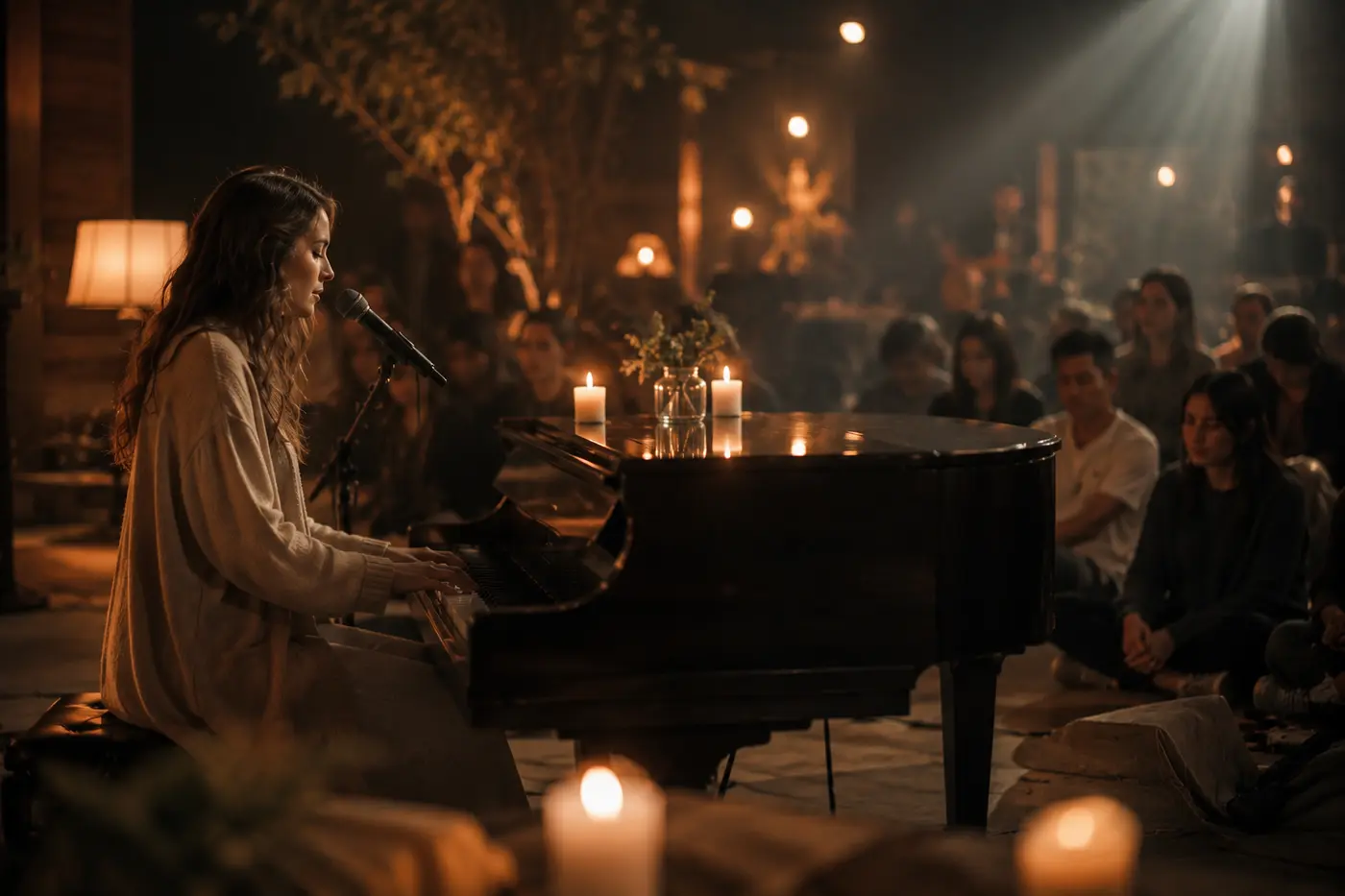
Skriv 'öppningslovsång' och AI:n genererar en sång som börjar med energi. Tempot ligger runt 120-130 BPM, texterna är deklarativa och instrumenteringen driver framåt. Skriv 'reflektion mitt under gudstjänsten' och tempot sjunker till 70-80, texterna blir inåtvända, arrangemanget tunnas ut till piano eller akustisk gitarr med röst. Skriv 'avslutningsvälsignelse' och AI:n producerar något mjukt med en känsla av fullbordan, en sång som skickar ut folk snarare än drar in dem. Det här är olika sånger för olika funktioner. Tillfältsfältet är den viktigaste inputen eftersom lovsångsmusik är funktionell. Den tjänar ett specifikt ögonblick.
Varför AI:n medvetet håller melodierna enkla
En lovsångsmelodi som vandrar genom oväntade intervaller låter intressant på en inspelning. I ett rum med 200 personer låter det som kaos. AI:n begränsar melodierna till omfång och intervaller som otränade röster hanterar bekvämt. De flesta toner rör sig stegvis. Språng sker på förutsägbara platser, vanligtvis i början av en refräng där energin lyfter. Refrängmelodin upprepas identiskt varje gång så att folk lär sig den inom sången. Detta är ett kompositionsval som lovsångsledare gör medvetet, och AI:n replikerar det. Om du vill ha något mer musikaliskt äventyrligt, lägg till 'komplex melodi, performance-stycke' för att åsidosätta standardinställningen.
Akustiskt till fullt band: hur instrumenteringen skiftar
Skriv 'akustisk lovsång' och du får ett instrument och en röst. Piano eller gitarr, inget annat. Sången andas. Skriv 'fullt band-lovsång' och trummor, bas, elgitarr, keyboard och kanske en synth-pad fyller utrymmet. Skriv 'keyboard och stråkar' och arrangemanget blir orkestral-lovsång: piano med en stråk-pad under, inga trummor, lämpligt för reflekterande stunder. AI:n tilldelar instrument baserat på din stilbeskrivning men svarar också på tillfället. En sång för altaret tonas ner även om du valde 'fullt band' eftersom ögonblicket kräver sårbarhet, inte produktion.
Texter som inbjuder snarare än deklarerar
Gospelltexter säger 'Jag har gått igenom elden och jag står fortfarande.' Lovsångstexter säger 'Vi kommer som vi är.' Skillnaden är hållning. Lovsångstexter använder första person plural: vi, oss, vår. De formulerar uttalanden som inbjudningar eller böner snarare än vittnesbörd. 'Öppna våra ögon' istället för 'Jag kan se nu.' AI:n fångar upp denna konvention när du väljer en lovsångsstil. Om ditt temafält säger 'tacksamhet för helande', kommer texterna att rama in det som ett kollektivt erkännande snarare än en individuell deklaration. Skriv i första person singular om du specifikt vill ha ett solo-lovsångsuttalande, men standarden lutar åt det gemensamma.
Hur detta skiljer sig från ett generiskt AI-musikverktyg
Generiska AI-musikverktyg genererar sånger avsedda för lyssning. Lovsånger är avsedda för deltagande. AI:n begränsar melodiernas omfång, förenklar rytmen och ökar refrängrepetitionen så att resultatet fungerar när ett rum fullt av människor försöker sjunga med.
De flesta generatorer förstår inte gudstjänstkontexten. En öppningslovsång och en nattvardssång tjänar helt olika funktioner. Detta verktyg justerar tempo, energi, textens hållning och arrangemangets densitet baserat på var i gudstjänsten sången befinner sig.
Ett standardverktyg skriver texter som berättande. Lovsångstexter är formulerade som bön, inbjudan eller kollektiv deklaration. AI:n skiftar textens röst till första person plural och använder språkmönster hämtade från lovsångsskrivningstraditionen.
Andra generatorer maximerar arrangemangets densitet eftersom mer hektiska spår låter mer producerade. Lovsångsarrangemang behöver utrymme för röster. AI:n lämnar utrymme i mixen där församlingens sång skulle ligga, och håller instrumenteringen stödjande snarare än dominerande.